What Is a Branded Title? A Complete Guide to Vehicle Title Brands

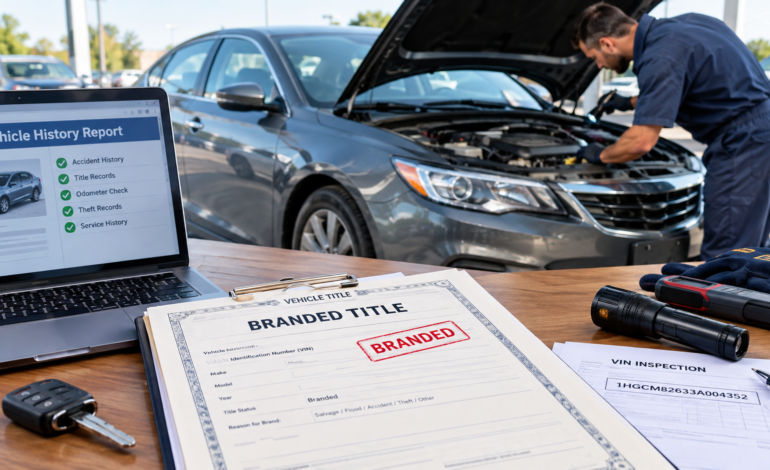
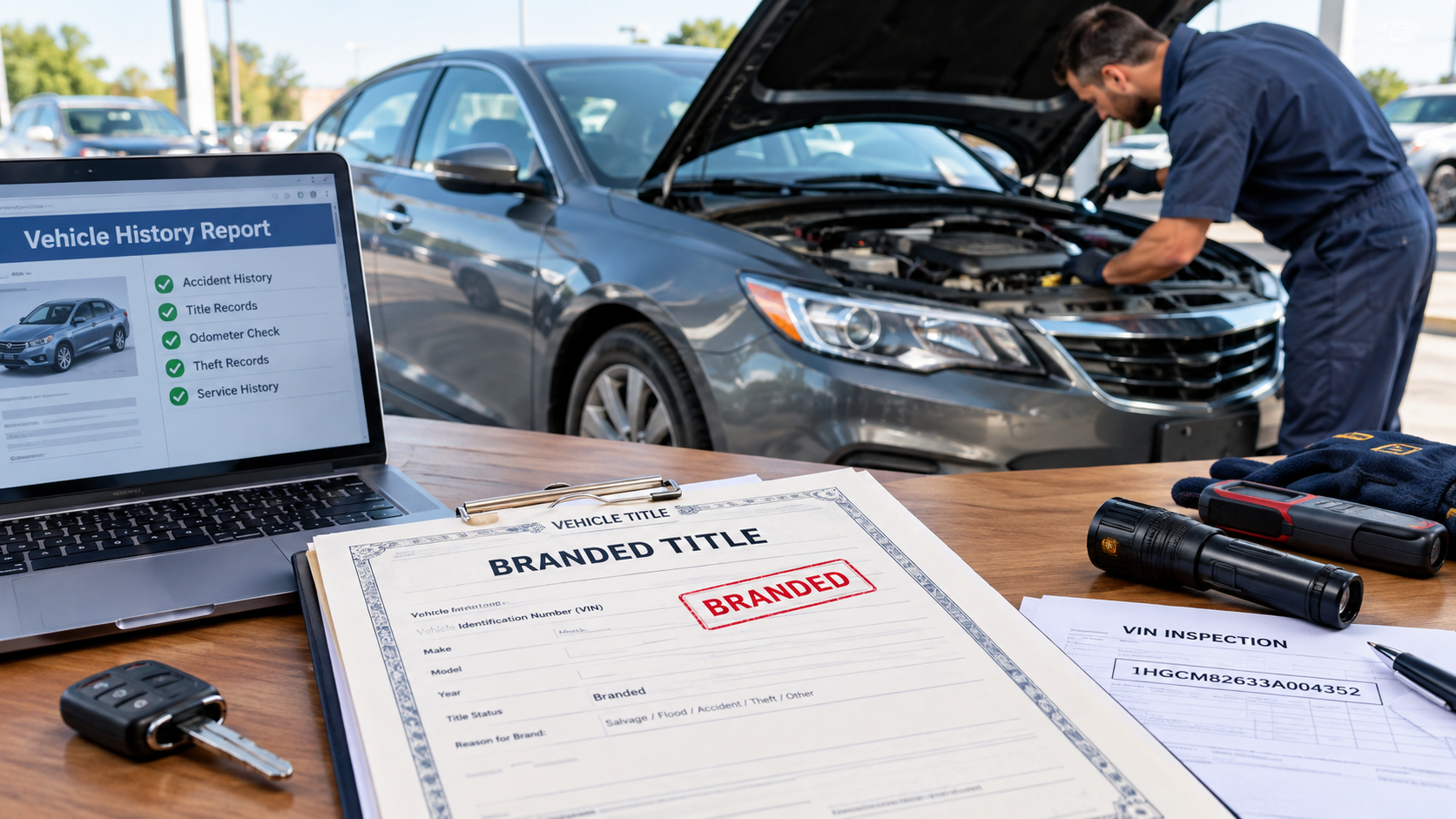
What is a branded title? A branded title is an official vehicle title that carries a special designation because the car has experienced a significant event or condition during its history. This may include major accident damage, flood exposure, salvage status, theft recovery, or another situation recognized by the relevant motor vehicle authority.
When buying a used vehicle, understanding a branded title can help you look beyond its appearance and asking price. A car may look completely repaired while still carrying a title history that affects its insurance, financing, resale value, and registration.
What Is a Branded Title?
So, what is a branded title in practical terms?
A branded title is a vehicle title containing a permanent or significant designation that tells future owners something important happened during the vehicle’s history. Unlike an ordinary title, it carries additional information about the vehicle’s previous condition or status.
For instance, an insurance company might determine that repairing a severely damaged vehicle is not financially practical. Depending on local rules, that vehicle could receive a salvage-related title brand.
Another vehicle might have suffered extensive water damage during a flood. Even if someone later repairs and restores it, the title can continue to reflect its previous history.
This is why a title brand should be viewed as a historical record rather than an automatic statement about the vehicle’s current condition.
Branded Title Meaning Explained
The branded title meaning is easier to understand when you think of the title as a vehicle’s official history record.
A title brand alerts future buyers, insurers, lenders, and authorities that the vehicle experienced a qualifying event. The brand can influence how the vehicle is registered, insured, financed, valued, and eventually sold.
There is no single nationwide list of title brands that works identically everywhere. Different states use different classifications and procedures. A designation that has one name in one jurisdiction may have a different name or requirement elsewhere.
Therefore, whenever you see a branded title, find out exactly what the brand means rather than assuming every branded vehicle has the same history.
What Does a Branded Title Mean on a Car?
A branded title on a car means that the vehicle’s official title history contains a designation related to a specific past event or condition.
Imagine two vehicles of the same make, model, year, and mileage. One has a clean title while the other has a salvage or rebuilt history. Even if both vehicles look similar today, their documented histories are different.
That distinction can affect their market value.
A branded title may also make some buyers more cautious because they do not know how extensive the original damage was or how well the vehicle was repaired. For that reason, documentation becomes especially important when evaluating one.
How Does a Vehicle Get a Branded Title?
There are several circumstances that can lead to a title brand. The exact process depends on local law, but serious damage and insurance-related total losses are common examples.
Consider a major collision. An insurer evaluates the vehicle and determines that the cost of restoring it is too high compared with its value. The vehicle may then be classified under a salvage-related designation.
Flooding can create another scenario. Water may damage wiring, electronics, mechanical components, and interior materials. A vehicle that appears usable after cleaning can still have hidden problems, which is why certain jurisdictions record flood-related title information.
Other title brands can be connected with theft recovery, odometer discrepancies, fire damage, or specific categories of rebuilt vehicles.
Common Types of Vehicle Title Brands
The phrase car title brands covers several different categories. Knowing the basic distinctions can make a vehicle history report much easier to understand.
Salvage Title
A salvage title generally identifies a vehicle that has sustained substantial damage or has been classified as a total loss under applicable regulations.
The vehicle might later be repaired, but its previous salvage history remains important. Depending on local requirements, additional inspections may be necessary before the vehicle can return to normal road use.
Rebuilt Title
A rebuilt title is commonly associated with a vehicle that previously had a salvage designation and was subsequently repaired.
After repairs, the vehicle may need to pass a state-required inspection before receiving a rebuilt or reconstructed designation. However, a rebuilt title should not be confused with a clean title because the vehicle’s previous history still matters.
Flood Title
Vehicles exposed to substantial water damage can receive a flood-related designation in jurisdictions that use such brands.
Flood damage deserves special attention because problems can develop gradually. Corrosion, damaged wiring, electrical failures, and mold can sometimes appear long after the original incident.
Theft-Related Title Brand
A stolen vehicle that is later recovered may receive a particular title designation depending on local rules and the circumstances surrounding its recovery.
The title treatment can vary, so buyers should examine the actual title records instead of relying on a generic label.
Odometer Brand
Some jurisdictions use title brands to identify situations involving inaccurate or questionable odometer information.
Mileage affects a vehicle’s perceived value, maintenance expectations, and resale price, making accurate odometer records particularly important.
Branded Title vs Clean Title
The difference between a branded title vs clean title is primarily the information recorded on the title.
A clean title generally does not carry a major title brand. However, that does not mean the vehicle has never been involved in an accident or experienced mechanical trouble.
A branded title, in contrast, identifies a qualifying event or condition in the vehicle’s official title history.
The distinction can affect several areas:
| Factor | Clean Title | Branded Title |
|---|---|---|
| Major title brand | Generally absent | Present |
| Documented title event | Usually not shown as a brand | Usually identified |
| Buyer perception | Often more straightforward | May require additional investigation |
| Resale | Usually easier | May involve a smaller buyer pool |
| Financing | Often more widely available | Some lenders may impose restrictions |
| Insurance | Usually simpler | Depends on insurer and vehicle history |
The title alone should not determine the vehicle’s quality. A clean-title car can still be poorly maintained, while a branded vehicle may have undergone extensive professional repairs.
Is a Branded Title Bad?
The question “is a branded title bad?” does not have one universal answer.
The important issue is why the vehicle received the brand and what happened afterward.
A car that was lightly damaged under one type of qualifying event can have a very different risk profile from a vehicle that suffered extensive structural damage or prolonged flooding.
Before making a decision, investigate:
- The original cause of the title brand
- The severity of the damage
- The repair facility or person responsible for repairs
- Available photographs from before and during repairs
- Parts that were replaced
- Inspection records
- Current mechanical condition
- Insurance availability
- Financing restrictions
- Expected resale value
A cheap purchase price is less meaningful if unexpected repairs or ownership restrictions consume the savings.
Can You Buy a Car With a Branded Title?
In many cases, you can buy a car with a branded title. Whether it can be registered, insured, financed, or driven legally depends on the specific title status and local regulations.
If you are considering one, treat the purchase as an investigation rather than a simple transaction.
Start with the VIN. Review the available vehicle history, inspect the title documents, and ask the seller for evidence supporting the repair story.
An independent mechanic should also examine the vehicle. Ideally, the inspection should happen before you make a commitment that cannot easily be reversed.
How to Check If a Car Has a Branded Title
Learning how to check if a car has a branded title can prevent expensive mistakes.
First, compare the VIN displayed on the vehicle with the VIN listed on the title and other documents. A mismatch should immediately be investigated.
Next, obtain a vehicle history report from a reputable provider. Such reports can contain information about title events, accidents, mileage records, insurance claims, theft reports, and other recorded incidents.
However, a history report is not a substitute for official records.
You should also verify the title status through the appropriate motor vehicle authority when possible. Ask the seller for repair invoices, inspection documents, photographs, and maintenance records.
Finally, arrange an independent inspection. A professional may spot evidence of repairs that an inexperienced buyer could easily overlook.
What Should You Look for During an Inspection?
A branded vehicle deserves a closer examination than a normal used-car purchase.
A collision-damaged vehicle should be checked for alignment problems, uneven panel gaps, suspension issues, structural repairs, replaced airbags, warning lights, and evidence of poorly fitted replacement components.
For a vehicle with possible flood history, electrical systems deserve particular attention. Inspect wiring, connectors, carpets, under-seat areas, and places where moisture or corrosion could remain hidden.
A test drive is useful, but it should not be the only inspection. Some problems are impossible to identify simply by driving around the block.
Branded Title Vehicle Risks
There are several branded title vehicle risks worth considering before purchasing.
Hidden Repair Problems
A vehicle can receive a polished exterior makeover while underlying mechanical or structural issues remain.
Difficult Insurance
Not every insurer handles branded vehicles in exactly the same way. Coverage options may depend on the vehicle’s title status and history.
Financing Restrictions
Some lenders may be unwilling to finance certain branded vehicles. Buyers relying on financing should investigate this before negotiating a final price.
Lower Resale Demand
A future buyer may be more hesitant to purchase a vehicle with a branded history. That can reduce the number of potential buyers when you eventually sell it.
Uncertain Repair Quality
Two vehicles with the same title brand can have completely different repair histories. One may have been restored professionally, while another may have received inexpensive repairs using questionable parts.
This is one reason documentation is so valuable.
Branded Title Car Insurance
Branded title car insurance is another issue buyers should investigate before purchasing.
Insurance companies establish their own underwriting requirements within applicable laws and regulations. Some may offer coverage for certain rebuilt vehicles, while others may place limitations on available coverage.
Do not assume that an insurance policy will automatically be available simply because the vehicle is legally registered.
A practical approach is to contact an insurer before buying the car. Provide the VIN and explain the exact title status. Ask what types of coverage would be available and whether any inspection or documentation is required.
Getting this information early can prevent problems after the purchase.
Branded Title Financing
Branded title financing may also be more complicated than financing a comparable clean-title vehicle.
Lenders often consider the vehicle’s collateral value when deciding whether to approve an auto loan. A branded history can make valuation more difficult because the vehicle may have a smaller resale market.
Some lenders may therefore refuse certain branded-title vehicles or apply different requirements.
If you need financing, get confirmation from the lender before paying a deposit. Do not build your purchase budget around a loan that has not been approved.
Does a Branded Title Affect Car Value?
Yes, a title brand can influence a vehicle’s market value.
The effect depends on several factors, including the type of brand, the vehicle’s age, its make and model, repair quality, documentation, local demand, and the severity of the original incident.
A branded vehicle may sell for substantially less than an otherwise comparable clean-title example because buyers accept additional uncertainty.
However, there is no universal percentage that applies to every branded vehicle. Using a fixed discount can be misleading because title brands represent many different situations.
Instead, compare similar vehicles with similar histories in the same market.
Branded Title Resale Value
Branded title resale value is important if you do not plan to keep the vehicle permanently.
A buyer who is comfortable purchasing a rebuilt vehicle may see value where another buyer sees too much risk. This means the potential audience can be smaller than it would be for a clean-title car.
Dealers may also have different policies regarding branded vehicles.
Before purchasing, consider your eventual exit strategy. If you expect to sell the vehicle within a few years, research comparable branded vehicles and see how they are priced in your area.
Can a Branded Title Become a Clean Title?
This is a common point of confusion.
In many situations, a title brand is designed to remain part of the vehicle’s history. A vehicle may move from a salvage classification to a rebuilt or reconstructed status after meeting the required repair and inspection standards, but that does not necessarily erase its previous history.
Whether a brand can be changed, corrected, or reclassified depends on the jurisdiction and the particular designation.
If someone tells you that they can easily turn a branded title into a clean title, verify that claim with the appropriate motor vehicle authority before paying for the service.
How to Remove a Branded Title
People searching for how to remove a branded title should first determine whether the title information is actually incorrect.
If a government record contains an error, there may be a formal process for correcting the information. If the vehicle has legitimately received a salvage, rebuilt, flood, or other brand, the rules governing that designation determine what can happen next.
In many cases, the goal is not to erase the history but to obtain the correct title classification after the vehicle satisfies the required conditions.
Never rely on a seller’s promise that a title brand can simply be “washed away.”
What Does a Branded Title Mean When Buying a Car?
When buying a car, a branded title should prompt you to ask more detailed questions.
Ask:
What happened to the vehicle?
How extensive was the original damage?
Who repaired it?
Are photographs available from before the repairs?
Are replacement parts and repair invoices documented?
Has the vehicle passed the required inspection?
Can it be insured normally?
Will a lender finance it?
What will happen when you eventually sell it?
The answers to these questions can tell you much more than the phrase “branded title” by itself.
Is It Safe to Buy a Car With a Branded Title?
The question “is it safe to buy a car with a branded title?” should be approached on a vehicle-by-vehicle basis.
The title brand identifies part of the vehicle’s history, but it does not describe every component’s current condition.
A professionally repaired vehicle with thorough documentation and a successful independent inspection may present a very different situation from one with unclear repairs and missing records.
Safety should therefore be evaluated through evidence rather than appearance or price alone.
If the vehicle has been involved in a serious crash, have qualified professionals examine its structural and safety systems. If it has flood history, pay particular attention to electrical and corrosion-related issues.
A Practical Checklist Before Buying
Before purchasing a branded vehicle, use this checklist:
- Get the VIN.
- Review the official title.
- Identify the exact title brand.
- Obtain a vehicle history report.
- Check for accident and insurance records.
- Ask for repair photographs.
- Request invoices and inspection documents.
- Have an independent mechanic inspect the vehicle.
- Confirm registration requirements.
- Contact your insurance company.
- Ask lenders about financing eligibility.
- Compare the price with similar branded vehicles.
- Consider future resale value.
- Walk away if the seller refuses reasonable documentation.
This process takes more time than buying a typical used car, but that extra research can reveal problems before they become your financial responsibility.
Final Thoughts
A branded title is essentially a warning that a vehicle has a documented history worth investigating. It can point to serious damage, salvage history, flood exposure, theft recovery, or another qualifying event, depending on the jurisdiction.
That history does not automatically tell you whether the vehicle is currently good or bad. The real picture comes from the title records, repair documentation, inspection results, current condition, insurance availability, and expected ownership costs.
If you are considering a branded vehicle, do not focus only on the discount. Find out why the title was branded, how the vehicle was repaired, who performed the work, and whether the current condition can be independently verified.
Understanding the title before buying gives you a much clearer picture of what you are actually paying for—and what responsibilities may come with the vehicle.