Brushing Scams: How They Work, Warning Signs, Risks & How to Stay Safe

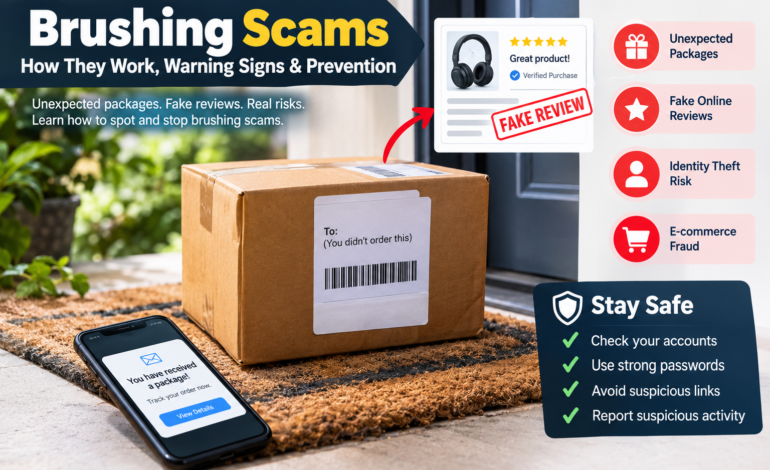
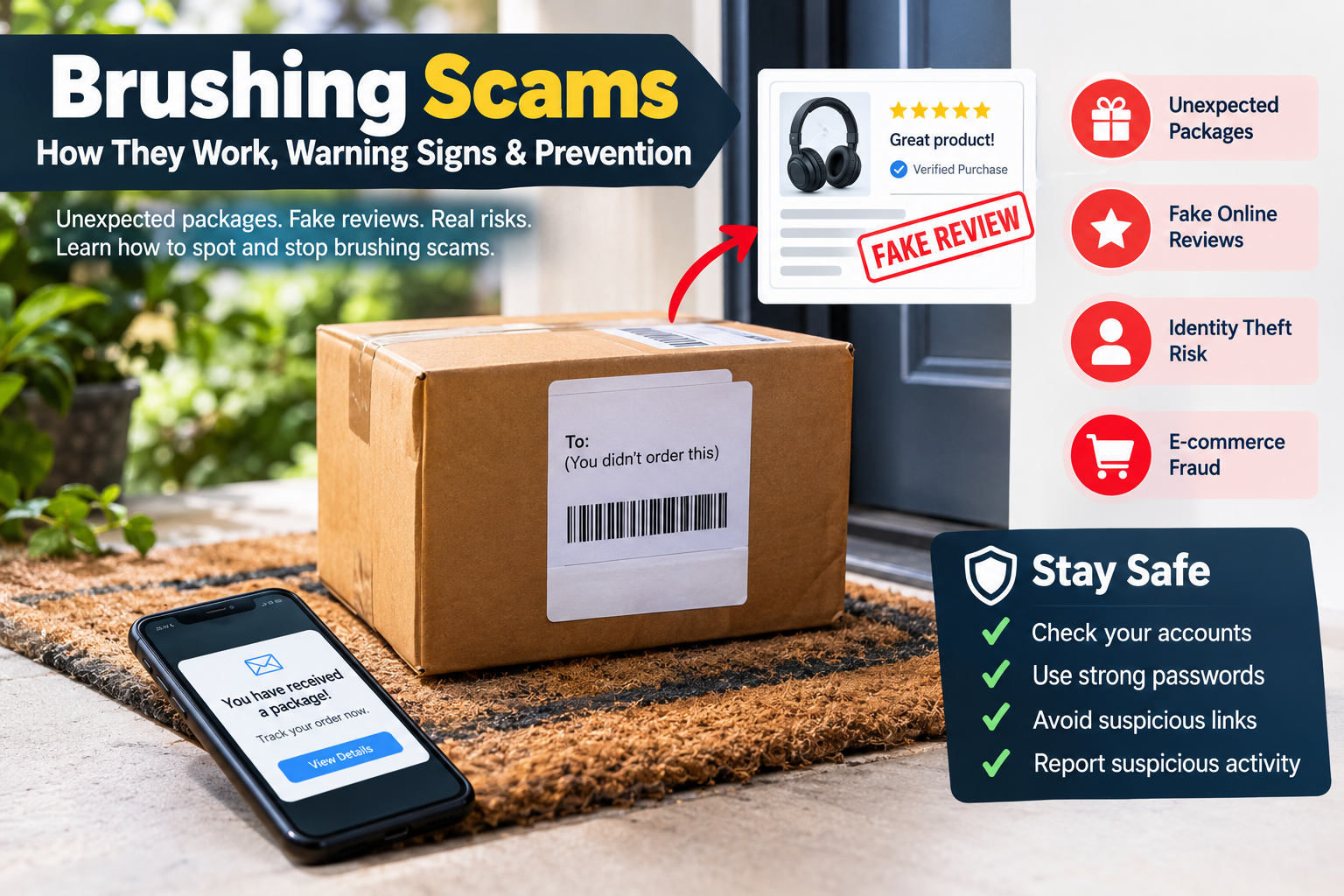
Brushing Scams are a growing type of online fraud in which people receive unexpected packages they never ordered. These unsolicited packages may be connected to fake sales, review manipulation, or attempts to make dishonest sellers appear more trustworthy. Understanding how brushing scams work can help you recognize suspicious deliveries and protect your personal information.
Receiving an unexpected package can be confusing, especially when there is no clear explanation for why it arrived. In some cases, the shipment may be harmless, but repeated deliveries or unfamiliar activity on your shopping account can indicate a potential scam. This guide explains the brushing scam meaning, common warning signs, risks, and practical ways to protect yourself.
What Are Brushing Scams?
Brushing scams are fraudulent schemes in which sellers send unsolicited products to people who did not order them. The goal is often to create the appearance of legitimate sales, improve seller metrics, or generate fake online reviews.
Online marketplaces commonly use sales numbers, customer feedback, and verified-purchase activity as signals of product popularity. Unscrupulous sellers may attempt to manipulate these systems by creating fake transactions.
For example, imagine that a seller wants a particular product listing to appear more trustworthy. The seller may obtain a person’s name and address and send a low-cost item to that address. The transaction can then be used to support misleading activity, such as posting a positive review.
The recipient may not lose money immediately, but the incident can still represent online fraud, privacy abuse, or misuse of personal information.
Brushing Scam Meaning Explained
The term “brushing” refers to a technique used to create fraudulent activity around online sales. The seller essentially “brushes up” sales numbers or reviews by generating transactions that do not represent genuine customer purchases.
Therefore, the brushing scam meaning is closely connected to fake purchases and review manipulation. The package itself is often only one visible part of a larger scheme.
How Brushing Scams Work
Understanding how brushing scams work makes it easier to recognize suspicious activity.
Although individual schemes can vary, a typical brushing scam may follow several steps.
1. A Seller Obtains Your Address
The scammer first obtains a recipient’s name and shipping address. This information may come from leaked databases, public sources, compromised accounts, previous purchases, data brokers, or other sources.
The presence of your address does not automatically mean your entire identity has been stolen. However, receiving an unsolicited package is a reason to pay closer attention to your online accounts.
2. An Unwanted Product Is Shipped
The seller sends a cheap or inexpensive item to the recipient. These unexpected packages can contain household products, accessories, electronics, beauty products, or other merchandise.
Sometimes the item is completely unfamiliar. In other cases, the package may have a recognizable marketplace label even though the recipient never placed an order.
3. The Seller Records a Fake Transaction
The seller may use the shipment to create the appearance that a legitimate customer purchased the product.
This is where seller rating manipulation becomes important. A marketplace may interpret sales activity as evidence that customers are interested in the product.
4. Fake Reviews May Follow
The seller may then create a fake product review or manipulate review activity. A supposedly verified purchase can make fraudulent feedback appear more believable.
This practice is known as review manipulation and can distort the reputation of products and sellers.
5. The Recipient May Be Left Confused
The person receiving the package may have no idea why it arrived. They might search their shopping accounts, check their bank statements, or contact the marketplace.
That confusion is one reason brushing scam packages can be difficult to identify immediately.
Why Am I Receiving Packages I Did Not Order?
One of the most common questions people ask is, “Why am I receiving packages I did not order?”
There are several possible explanations.
A seller may have sent the package as part of a brushing scam. However, there are also innocent possibilities, such as a gift from someone, a shipping mistake, a subscription you forgot about, or an order associated with another member of your household.
The important point is not to panic based solely on an unexpected delivery.
Instead, check your shopping accounts, email notifications, payment statements, and recent orders. If nothing explains the package and similar deliveries continue, treat the situation as potentially suspicious.
Common Brushing Scam Warning Signs
Recognizing brushing scam warning signs can help you respond before the situation becomes more serious.
You Receive an Unsolicited Package
An unexpected package that you did not purchase is the most obvious warning sign. A single unexplained delivery does not automatically prove fraud, but it deserves investigation.
The Package Contains a Cheap or Random Item
Brushing schemes often involve inexpensive merchandise because the primary objective may be creating transaction activity rather than making money from the individual recipient.
You Find a Review You Never Wrote
This is a particularly important warning sign. If a marketplace account shows that you reviewed a product you never purchased or received, your account information may have been misused.
Multiple Packages Arrive
Several unrelated unsolicited packages arriving within a short period can indicate that someone is repeatedly using your information.
Your Account Shows Unknown Orders
Check your marketplace accounts for purchases that you do not recognize. Unknown orders are more concerning than simply receiving a package because they may indicate account compromise or unauthorized payment activity.
You Notice Suspicious Account Activity
Password-reset emails, unfamiliar login notifications, changed account information, or unknown addresses saved in an account should be investigated immediately.
How Fake Reviews Are Created Through Brushing Scams
One of the biggest purposes of brushing scams is often fake online reviews.
Reviews influence purchasing decisions. When shoppers see hundreds of positive ratings, they may assume that a product is reliable and popular.
Fraudulent sellers can exploit this trust.
A seller may arrange an artificial transaction and then attempt to associate the product with a supposedly real customer. The seller can subsequently create a positive review or otherwise manipulate marketplace feedback.
This is why fake seller reviews, fake product reviews, and review manipulation are important parts of the brushing scam problem.
Why Fake Reviews Matter
Fake reviews do more than make one seller look better.
They can:
- Mislead customers
- Hide poor-quality products
- Increase seller visibility
- Distort marketplace rankings
- Create false consumer confidence
- Harm legitimate competitors
- Make genuine reviews harder to identify
As a result, brushing scams can affect consumers who never receive the original package.
Amazon Brushing Scam: What You Should Know
The phrase Amazon brushing scam is commonly used when people receive unexpected merchandise associated with Amazon or sellers operating through the marketplace.
Receiving an unsolicited Amazon package does not automatically mean that Amazon itself sent the item as part of a scam. A third-party seller may be responsible for the transaction.
If you receive an unexpected package, check your Amazon account for orders you do not recognize. Also review your payment methods and account security settings.
If the package appears suspicious, avoid following random instructions included with the shipment. Instead, use the marketplace’s official support channels to report the issue.
The same general principle applies to other online marketplaces.
Are Unsolicited Packages a Brushing Scam?
Are unsolicited packages a brushing scam? Sometimes, but not always.
An unsolicited package can result from a brushing scheme, a shipping error, a gift, or another legitimate explanation.
The contents alone are not enough to determine what happened.
Look for additional evidence:
- Is there an order in your account?
- Was your payment method charged?
- Did you receive a strange review notification?
- Have multiple packages arrived?
- Is your account showing unfamiliar activity?
- Does the shipping information appear unusual?
The more warning signs appear together, the more seriously you should treat the situation.
What to Do If You Receive an Unexpected Package
Knowing what to do if you receive an unexpected package is more useful than simply assuming the package is harmless.
1. Do Not Panic
Receiving a strange package can be unsettling, but it does not automatically mean that your identity has been stolen.
Start by investigating the situation calmly.
2. Check Your Shopping Accounts
Review recent orders on Amazon and other marketplaces you regularly use.
Look for purchases, saved addresses, payment methods, and reviews that you do not recognize.
3. Check Your Bank and Card Statements
Look for unauthorized charges. If the package is connected to an account you did not authorize, contact your bank or card provider through its official contact information.
4. Photograph the Package Information
Keep a record of the shipping label, tracking information, and contents if needed for reporting purposes.
Avoid sharing sensitive personal information publicly when documenting the incident.
5. Contact the Marketplace
Use the platform’s official customer-support system to report the package.
Explain that you received merchandise you did not order and ask whether the shipment is connected to your account.
6. Change Important Passwords When Appropriate
If you discover suspicious account activity, change your password and make sure you are using a strong, unique password.
Enable multifactor authentication whenever the service provides it.
Brushing Scam Package: What Should You Do With It?
A common question is “What should you do with a brushing scam package?”
First, determine whether the item is connected to an account or transaction you recognize.
Do not scan unfamiliar QR codes, visit suspicious websites, call questionable phone numbers, or provide personal information simply because the package contains instructions asking you to do so.
If the item itself appears harmless, the safest course may depend on the marketplace and local consumer rules. Contact the seller or marketplace through an official channel before taking action.
Most importantly, do not pay an unexpected invoice simply because an unsolicited product arrived at your address.
Can Brushing Scams Lead to Identity Theft?
The question “Can brushing scams lead to identity theft?” deserves careful attention.
A brushing scam by itself does not necessarily mean that identity theft has occurred. However, the scheme may indicate that someone has obtained at least some personal information about you.
The information involved might include your name and address. In more serious situations, compromised data could include account credentials or other personal details.
That is why personal information theft and identity security should be considered when unexplained packages appear repeatedly.
Monitor your accounts and watch for unusual activity. If you discover unauthorized financial transactions or account access, respond promptly using the appropriate financial institution or service provider.
Brushing Scam Risks
The main brushing scam risks extend beyond receiving an unwanted product.
Privacy Concerns
Your name and address may have been obtained or used without your permission.
Account Compromise
If suspicious activity is connected to one of your online accounts, your credentials may need attention.
Identity Theft
In some situations, exposed personal information can contribute to broader identity-related fraud.
Fake Reviews
Your identity may be associated with a review you never wrote.
Marketplace Manipulation
Fraudulent transactions can distort rankings, ratings, and customer purchasing decisions.
Additional Scam Attempts
Once scammers know that certain contact information is active, they may attempt additional phishing or fraud.
How to Protect Yourself From Brushing Scams
Effective brushing scam prevention starts with good account and privacy habits.
Use Strong, Unique Passwords
Avoid using the same password across shopping, email, banking, and social-media accounts.
A password manager can help create and store unique credentials.
Enable Multifactor Authentication
Multifactor authentication adds another security layer to your account. Even if someone obtains your password, an additional verification step can make unauthorized access more difficult.
Review Shopping Accounts Regularly
Check your order history and saved payment methods periodically.
Early detection can make suspicious activity easier to resolve.
Limit Publicly Available Personal Information
Avoid unnecessarily publishing your full home address or other sensitive details online.
Be Careful With QR Codes
A package containing a QR code may encourage you to visit a website. Treat unfamiliar codes cautiously, especially when they request passwords, payments, or personal information.
Watch Your Financial Accounts
Regularly review bank and card statements for transactions you do not recognize.
Be Skeptical of Unexpected Messages
Scammers may follow an unwanted delivery with an email or text asking you to verify information.
Do not automatically trust such messages.
How to Recognize Suspicious Package Delivery Scams
Learning how to recognize suspicious package delivery scams can help you distinguish ordinary shipping mistakes from potentially fraudulent activity.
Be especially cautious when a package is accompanied by urgent instructions, payment requests, suspicious QR codes, unfamiliar websites, or requests for personal information.
Another warning sign is a message claiming that you must pay a fee to keep an item you never ordered.
Never provide sensitive information merely because a package arrived at your home.
Instead, verify the situation independently through the official marketplace, delivery company, or account involved.
What Happens When Scammers Send Unsolicited Products?
When scammers send unsolicited products, several things may happen behind the scenes.
The seller may record the delivery as a completed transaction. That transaction could then support seller rating manipulation or fake review activity.
The recipient might also be added to a database of apparently legitimate customers.
In other cases, the package may simply be the first indication that personal information has circulated between different sources.
Therefore, an unsolicited product should not automatically be treated as harmless promotional material.
Brushing Scams and Online Shopping Scams
Brushing scams are part of the broader world of online shopping scams and marketplace fraud.
Modern e-commerce depends heavily on trust. Customers rely on ratings, reviews, seller histories, product photographs, and transaction records when deciding what to purchase.
Fraudsters exploit these systems because manipulated trust can generate real sales.
Other forms of e-commerce scams may involve fake websites, counterfeit products, phishing messages, payment fraud, or fraudulent sellers.
Brushing is different because the recipient may not be asked for money at all. Instead, the fraudulent activity may primarily benefit the seller.
Brushing Scams vs. Other Package Scams
Not every package-related problem is a brushing scam.
A package delivery scam may involve fake delivery notices, payment requests, phishing links, or fraudulent tracking messages.
A brushing scam usually involves merchandise that was actually shipped to a real address without the recipient ordering it.
Understanding this difference can help you choose the appropriate response.
| Type of Scam | Common Warning Sign | Main Goal |
|---|---|---|
| Brushing scam | Unsolicited product | Fake sales or reviews |
| Delivery phishing | Fake tracking message | Steal information |
| Fake shopping site | Suspicious online store | Obtain payment |
| Review scam | Unnatural ratings | Manipulate reputation |
| Account takeover | Unknown login/order | Access accounts |
How to Report a Brushing Scam Online
If you believe you have encountered a brushing scheme, you should report brushing scams through the appropriate official channels.
Start with the marketplace associated with the package. Report the unsolicited order and explain that you did not purchase the product.
If you find unauthorized financial activity, contact your financial institution through its official website or phone number.
If you suspect identity-related fraud, consider reporting the incident to the relevant consumer-protection or law-enforcement authority in your country.
Keep records of suspicious packages, order information, emails, and account activity. Documentation can make the reporting process easier.
How to Avoid Online Shopping and Brushing Scams
The best way to avoid online shopping and brushing scams is to combine careful shopping habits with strong digital security.
Purchase products from reputable marketplaces and verify sellers before making expensive purchases.
Do not rely solely on star ratings. Read multiple reviews and look for detailed feedback that appears genuine and consistent.
Be cautious of products with thousands of reviews but little meaningful information.
Also avoid clicking links in unexpected messages claiming to provide shipping updates. Instead, open the official marketplace or delivery service directly.
How to Protect Your Address From Brushing Scams
You cannot always prevent your address from appearing in databases or shipping records, but you can reduce unnecessary exposure.
Avoid posting your full residential address publicly.
Review privacy settings on online accounts and remove unnecessary personal information where possible.
If an online retailer allows you to control saved addresses, regularly review them and delete addresses you no longer use.
If you repeatedly receive suspicious packages, report the activity to the marketplace and relevant authorities rather than attempting to confront an unknown sender.
Are Brushing Scams Dangerous?
Brushing scams can be concerning, but receiving one unsolicited package does not automatically mean that you are in immediate danger.
The greater concern is what the package may reveal about how your personal information is being used.
A single unwanted product could be an isolated brushing attempt. Repeated deliveries, unauthorized reviews, unknown orders, or suspicious account activity deserve more attention.
The safest response is to investigate without interacting with suspicious links or requests.
Frequently Asked Questions About Brushing Scams
What are brushing scams and how do they work?
Brushing scams involve sellers sending products to people who did not order them. The seller may use the delivery to create fake transaction history, improve seller metrics, or support fraudulent reviews.
Is receiving an unexpected package a scam?
Not necessarily. An unexpected package may be a gift, shipping mistake, or brushing scam. Check your accounts and payment activity before deciding what happened.
Why do scammers send packages to your address?
Scammers may send products to create artificial sales activity or support fake online reviews. Your address may have been obtained from various online or commercial sources.
Can brushing scams steal my personal information?
The presence of a brushing package does not prove that identity theft occurred. However, it may indicate that someone has access to some personal information, such as your name and address.
What should I do with a brushing scam package?
Check your shopping accounts, payment statements, and email notifications. Avoid suspicious QR codes or links, document the shipment, and report the incident through the marketplace’s official support system.
How can I protect myself from brushing scams?
Use unique passwords, enable multifactor authentication, monitor shopping and financial accounts, limit public personal information, and remain cautious about unexpected package messages.
How do I report a brushing scam online?
Report the incident directly to the marketplace involved. If you find unauthorized financial activity or evidence of identity-related fraud, contact your financial institution and the relevant consumer-protection authority.
Are unsolicited packages a brushing scam?
They can be, but an unsolicited package alone is not enough to confirm a brushing scam. Look for additional signs such as fake reviews, unknown orders, repeated deliveries, or suspicious account activity.
Final Thoughts on Brushing Scams
Brushing scams demonstrate how online marketplaces can be manipulated through seemingly harmless transactions. An unexpected package may look like a minor curiosity, but it can sometimes be connected to fake reviews, seller rating manipulation, e-commerce fraud, or misuse of personal information.
The most important response is to remain calm and investigate carefully. Check your shopping accounts, review financial activity, protect your passwords, and avoid suspicious links or QR codes included with unexpected merchandise.
If you discover unauthorized activity, report it through official channels and keep records of what happened.
Understanding how brushing scams work gives consumers an important advantage. By recognizing warning signs early and practicing basic digital security, you can reduce the risks associated with unwanted packages, marketplace scams, and broader online fraud.