How to Choose the Best Newborn Baby Clothes

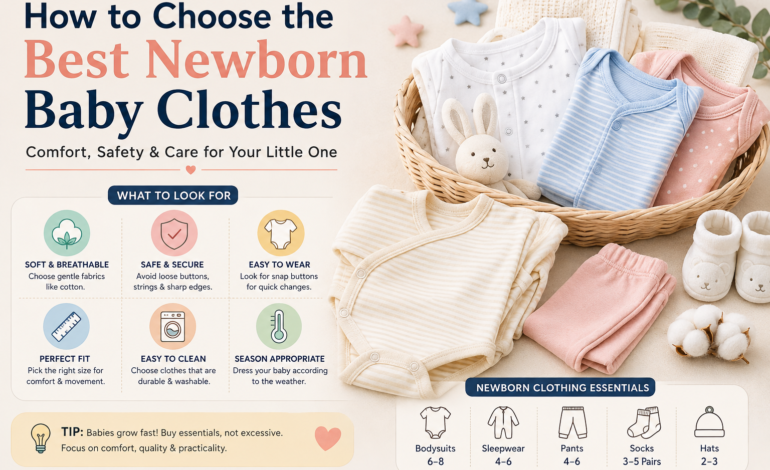
Choosing the right clothes for a newborn can feel overwhelming, especially for first-time parents. Babies have delicate skin, grow quickly, and need clothing that keeps them comfortable without restricting movement. With so many designs, fabrics, sizes, and styles available, knowing what to buy can make shopping much easier.
The best newborn baby clothes should be soft, comfortable, breathable, easy to put on, and suitable for the baby’s age and the weather. Parents should also consider practical features such as easy diaper changes, flexible fabrics, safe fastenings, and simple washing instructions.
This guide explains how to choose Baby clothes for newborns, what fabrics work best, which clothing essentials you actually need, and how to select the right size. Whether you are preparing for your baby’s arrival or shopping for a newborn gift, these tips can help you make practical and comfortable choices.
Why Choosing the Right Newborn Baby Clothes Matters
Newborn babies spend most of their time sleeping, feeding, and being held. Because they have limited control over their body temperature and sensitive skin, clothing plays an important role in their everyday comfort.
Clothes that are too tight can restrict movement, while oversized clothing may be uncomfortable or create safety concerns. Rough fabrics, scratchy labels, and poorly designed fasteners can also irritate delicate skin.
When shopping, focus on three basic qualities: comfort, safety, and practicality. A beautiful outfit is useful, but it should never come before the baby’s comfort.
The right clothing should allow your baby to move naturally while keeping them appropriately dressed for the environment.
What to Look for in Baby Clothes for Newborns
When selecting Baby clothes for newborns, look beyond appearance. Newborn clothing should be designed with everyday care in mind.
Look for:
- Soft and smooth fabrics
- Comfortable fits
- Breathable materials
- Simple openings
- Easy diaper access
- Secure but gentle fasteners
- Minimal decorative elements
- Easy-care washing instructions
- Appropriate seasonal weight
Clothing with wide neck openings or convenient snaps can make dressing easier. This is particularly helpful during the first few weeks when parents are still becoming familiar with handling a newborn.
Avoid clothing with rough seams, stiff materials, loose decorative pieces, or complicated closures. Simple designs are often the most practical choice for everyday use.
Newborn Clothing Essentials Every Parent Should Have
Before buying a large wardrobe, create a list of Newborn clothing essentials. Babies grow quickly, so there is usually no need to purchase dozens of outfits in the smallest size.
A practical newborn wardrobe may include:
- Bodysuits
- Sleepwear
- Soft pants
- Lightweight tops
- Socks
- Mittens when appropriate
- Hats for suitable weather
- Cardigans or sweaters for cooler conditions
- Seasonal outer layers
- A few comfortable outfits for outings
The exact number depends on how frequently you plan to do laundry and what season your baby will be born in.
For everyday use, bodysuits and sleepwear are often more useful than elaborate outfits. Parents can add a few attractive outfits for photographs, family gatherings, or special occasions.
Choose Comfortable Newborn Clothes
Comfort should be one of the most important factors when buying Comfortable newborn clothes. Newborns spend many hours lying down, so clothing should not have uncomfortable seams, stiff waistbands, or excessive decoration.
Choose flexible fabrics that allow your baby to move their arms and legs freely. Clothing should fit comfortably around the neck, chest, waist, and legs without creating pressure.
Soft elastic can make pants easier to wear, while stretchable materials can make bodysuits easier to put on and remove.
Parents should also check the inside of the clothing. Sometimes a garment looks soft from the outside but contains rough stitching, labels, or seams that may irritate the baby’s skin.
Why Soft Baby Clothes Are Important
Newborn skin is delicate and can be more sensitive than adult skin. For this reason, Soft baby clothes are generally a better choice for everyday wear.
Cotton and other gentle fabrics are popular because they can feel comfortable against the skin. Parents should pay attention to how the material feels rather than choosing clothing based only on its appearance.
Before dressing your baby, check for:
- Rough seams
- Scratchy labels
- Hard buttons
- Stiff decorations
- Excessive stitching
- Loose threads
- Uncomfortable elastic
If a garment feels rough when you run it across your own hand, it may not be the best option for prolonged contact with newborn skin.
Washing new clothes before the first use can also help remove manufacturing residues and dust.
How to Choose Safe Newborn Clothing
Safe newborn clothing should be comfortable and appropriately designed for babies. Clothing should not contain unnecessary features that could create risks during sleep or everyday movement.
Avoid garments with loose decorative pieces, detachable accessories, or long strings that could become problematic. Check buttons, snaps, and other fasteners regularly to make sure they remain securely attached.
For sleep, follow current safe-sleep guidance from trusted pediatric and public-health organizations rather than relying on clothing trends.
Parents should also avoid dressing babies in excessive layers. Too many layers can make a baby uncomfortably warm. Instead, consider the room temperature, weather, and the clothing material.
When in doubt, simple clothing with minimal decoration is often a practical choice.
Newborn Clothing Checklist
A Newborn clothing checklist can prevent unnecessary shopping and help parents prepare before the baby arrives.
Here is a basic checklist to consider:
Everyday Clothing
- 6–8 bodysuits
- 4–6 pairs of soft pants
- 4–6 comfortable tops or one-piece outfits
- Several pairs of socks
- A few lightweight layers
Sleepwear
- 4–6 suitable sleep outfits
- Appropriate seasonal sleep layers
- Wearable sleep options when recommended for your baby’s age and environment
Cold Weather
- Warm but breathable layers
- Soft sweaters or cardigans
- Seasonal outerwear
- A suitable hat for outdoor use
Warm Weather
- Lightweight bodysuits
- Breathable one-piece outfits
- Lightweight cotton clothing
- Fewer layers
The quantities above are only general starting points. Your baby’s laundry routine, weather, and personal preferences may change how many clothes you need.
Choosing Baby Clothes for Sensitive Skin
Parents looking for Baby clothes for sensitive skin should pay close attention to fabric texture, washing products, and garment construction.
Soft, breathable fabrics are often preferred because they allow air circulation and reduce unnecessary friction. Some babies may be more sensitive to certain fabrics, dyes, fragrances, or laundry products.
If your baby develops persistent redness, irritation, or another skin concern, speak with a pediatrician or other qualified healthcare professional.
For everyday clothing, consider:
- Smooth fabrics
- Breathable materials
- Minimal seams
- Comfortable fits
- Fragrance-free laundry products when appropriate
- Clothing that can be washed easily
Avoid assuming that an expensive fabric is automatically better. The most important consideration is whether the garment is comfortable and suitable for your baby’s skin.
Are Newborn Cotton Clothes a Good Choice?
Newborn cotton clothes are popular because cotton can be soft, lightweight, and breathable. It is also widely available and can be relatively easy to wash.
Cotton clothing can work well for many everyday situations, but not every cotton garment is identical. Fabric thickness, weave, finishing, and construction can affect how a garment feels.
For warm conditions, lightweight cotton can help provide breathability. During cooler weather, parents can use appropriate layers rather than relying on one heavy garment.
When shopping, read the clothing label and consider how the material will work with the temperature where your baby will spend most of their time.
Choose Breathable Baby Clothes
Breathable baby clothes can help your baby remain comfortable, particularly in warmer weather.
Breathability allows air to circulate through the fabric and can help prevent clothing from feeling excessively warm or damp.
Lightweight cotton and similar breathable fabrics are commonly used for warm-weather baby clothing. For cooler conditions, breathable layers can be combined to provide warmth while allowing parents to adjust clothing as temperatures change.
Signs that your baby may be too warm can include sweating, flushed skin, or a hot chest. If you are concerned about your baby’s temperature or behavior, seek professional medical advice.
Rather than choosing clothing based only on the season, consider the actual temperature and indoor environment.
How to Select Newborn Baby Outfits
Newborn baby outfits should combine comfort with practicality. While matching outfits can be adorable, parents should consider how easy they are to put on and remove.
For everyday wear, one-piece outfits and bodysuits are often convenient. For special occasions, parents may choose a more decorative outfit, but it should still allow comfortable movement.
When selecting an outfit, ask yourself:
- Is it easy to put on?
- Is it comfortable against the skin?
- Can I change a diaper easily?
- Is it suitable for the weather?
- Can it be washed easily?
- Does it fit appropriately?
- Does it have unnecessary decorations?
If the answer is yes to most of these questions, the outfit is likely to be practical.
Baby Bodysuits for Newborns: What to Look For
Baby bodysuits for newborns are among the most useful pieces of baby clothing. They typically cover the baby’s torso and fasten around the diaper area.
Bodysuits are convenient because they stay in place and can be paired with pants, leggings, sweaters, or other layers.
When buying bodysuits, look for:
- Soft fabric
- Stretchable construction
- Convenient snaps
- Wide or flexible neck openings
- Comfortable leg openings
- Easy diaper access
It can be helpful to purchase a mixture of short-sleeve and long-sleeve bodysuits depending on the season.
However, avoid buying too many newborn-size bodysuits. Babies can outgrow their first sizes surprisingly quickly.
Choosing the Right Newborn Sleepwear
Newborn sleepwear should prioritize comfort and safety rather than fashion.
Newborns spend a significant amount of time sleeping, so their sleep clothing should be appropriate for the room environment and the baby’s developmental stage.
Choose clothing that allows comfortable movement and avoids excessive loose material. Parents should follow current safe-sleep recommendations when choosing sleep clothing and preparing the baby’s sleeping environment.
The right sleepwear also depends on temperature. Instead of automatically adding heavy layers, consider the room conditions and choose suitable clothing accordingly.
Always check the garment’s care instructions and inspect it regularly for loose threads, damaged fasteners, or other problems.
Understanding Baby Clothing Sizes
One of the most confusing parts of shopping for newborn clothing is understanding Baby clothing sizes.
Baby sizes are commonly based on age ranges, weight, length, or a combination of these measurements. However, sizing can vary between brands.
A garment labeled “newborn” may fit differently from another garment with the same label. Some babies may also move into the next size sooner than expected.
Instead of buying clothing based only on the age printed on the label, check the manufacturer’s sizing chart whenever possible.
It is also useful to have a small number of clothes in the next size. This allows you to transition easily when your baby begins growing out of newborn clothing.
Look for signs that clothing is becoming too small, such as:
- Difficulty fastening snaps
- Tight waistbands
- Restricted movement
- Marks on the skin
- Sleeves or legs becoming noticeably short
Clothing should never be so tight that it leaves uncomfortable pressure marks.
Don’t Buy Too Many Newborn-Size Clothes
A common mistake among new parents is buying too many tiny outfits.
Newborn clothing is appealing because it is small and cute, but babies can grow rapidly during their first months. Some babies may barely wear the smallest size before moving to larger clothing.
A better approach is to buy a practical selection of newborn-size clothing and several pieces in the next size.
This also gives you flexibility if your baby’s size or growth rate is different from what you expected.
Remember that frequent diaper changes can also mean clothes get dirty quickly. Having several basic outfits available is more useful than having a large collection of special-occasion clothing.
Consider the Season When Shopping
The season in which your baby is born should influence your clothing choices.
For a summer newborn, focus on lightweight, breathable fabrics and simple layers. Bodysuits and lightweight one-piece outfits can be useful.
For a winter newborn, consider layering with comfortable clothing rather than relying on one extremely heavy garment.
Spring and fall can require flexible wardrobes because temperatures may change throughout the day.
A useful rule is to purchase clothing that allows you to add or remove layers as needed. This is often more practical than buying an entire wardrobe designed for one specific temperature.
Easy Diaper Changes Matter
Newborns need frequent diaper changes, so clothing should make this process as easy as possible.
Bodysuits with snaps around the diaper area can save time and reduce the need to completely undress the baby. One-piece outfits with convenient openings can also be practical.
Avoid clothing that requires complicated steps every time you need to change a diaper.
Parents quickly discover that simple clothing designs can make daily routines much easier.
Think About Laundry Before Buying
Newborn clothing needs frequent washing, so choose garments that fit your laundry routine.
Look for clothes that can be washed according to your normal schedule. Check care labels before purchasing delicate items.
It can be tempting to buy beautiful outfits made from materials that require special care, but these may become less practical when you are managing frequent diaper changes and laundry.
Easy-care fabrics can be particularly useful for everyday clothing.
Wash new baby clothing before use and follow the care instructions provided by the manufacturer.
What to Avoid When Buying Newborn Clothes
Knowing what not to buy is just as important as knowing what to purchase.
Avoid excessive amounts of:
- Very stiff clothing
- Rough fabrics
- Complicated outfits
- Loose decorative parts
- Long strings
- Uncomfortable fasteners
- Extremely tight clothing
- Clothing that is difficult to wash
- Too many outfits in the smallest size
You do not need to sacrifice style. There are many attractive baby clothes that are also simple, soft, and practical.
The key is to choose comfort and safety first.
A Simple Newborn Clothes Shopping Guide
This Newborn clothes shopping guide can help you make better purchasing decisions.
Step 1: Consider the Weather
Start by thinking about when your baby will be born and the typical temperature in your area.
Step 2: Choose Comfortable Fabrics
Select soft and breathable materials that feel gentle against the skin.
Step 3: Buy Basic Essentials First
Start with bodysuits, sleepwear, pants, socks, and suitable layers.
Step 4: Check Sizing
Look at the manufacturer’s measurements instead of relying only on the age printed on the label.
Step 5: Prioritize Easy Dressing
Choose clothing with simple openings and convenient diaper access.
Step 6: Inspect Safety Features
Avoid loose decorations, long strings, and poorly secured components.
Step 7: Think About Laundry
Choose clothing that fits your normal washing routine.
Step 8: Buy Some Larger Sizes
Keep a few larger garments available because babies can grow quickly.
Step 9: Wash Before Use
Clean new clothing according to the manufacturer’s instructions before putting it on your baby.
How Many Newborn Baby Clothes Do You Need?
There is no single number that works for every family. Your baby’s clothing needs depend on how frequently you do laundry, the season, and how often clothes become dirty.
A reasonable starting wardrobe may include several bodysuits, a few pairs of pants, several sleepwear options, socks, and seasonal layers.
Instead of buying everything at once, start with essential pieces. You can purchase more clothing later if you discover that certain styles work particularly well for your baby.
This approach can also save money and prevent unused clothing from piling up.
Newborn Clothes for Home and Outings
Your baby’s wardrobe can include different clothing for different situations.
At home, simple bodysuits, soft pants, and comfortable sleepwear are usually practical.
For outings, you may want a few attractive Newborn baby outfits that are easy to put on and suitable for the weather.
If you are traveling, choose clothes that are easy to change. Pack extra outfits because newborns can unexpectedly need a clothing change after feeding or a diaper leak.
The goal is not to create a huge wardrobe but to have enough practical choices for everyday life.
How to Save Money on Newborn Baby Clothes
Newborn clothing can become expensive if you purchase too many pieces. Fortunately, parents can create a practical wardrobe without overspending.
First, prioritize essentials over trendy outfits. Basic bodysuits and sleepwear will usually get more use than elaborate occasion clothing.
Second, avoid buying excessive quantities in the smallest size.
Third, consider purchasing multipacks when they offer good value.
Fourth, compare fabrics, construction, and care requirements instead of choosing clothing based only on brand name.
Finally, remember that babies grow quickly. Spending more on every piece does not necessarily mean you will get more value from it.
Final Newborn Baby Clothes Checklist
Before completing your shopping, review this quick checklist:
- Soft and comfortable fabrics
- Breathable everyday clothing
- Several bodysuits
- Comfortable sleepwear
- A few pairs of soft pants
- Socks suitable for the season
- Appropriate seasonal layers
- Easy diaper access
- Suitable clothing sizes
- Minimal loose decorations
- Easy-care fabrics
- A few larger sizes
- Clothes washed before first use
This checklist can help you avoid buying unnecessary items while ensuring that your baby has the basics needed for everyday comfort.
Final Thoughts
Choosing the best newborn baby clothes does not have to be complicated. The most important factors are comfort, fit, breathability, safety, practicality, and suitability for the weather.
Start with essential pieces such as bodysuits, sleepwear, soft pants, and seasonal layers. Choose gentle materials and pay attention to seams, fasteners, and decorations. When shopping for Baby clothes for newborns, always consider how easy each item will be to put on, remove, wash, and use during frequent diaper changes.
A thoughtful Newborn clothing checklist can help you avoid unnecessary purchases, while understanding Baby clothing sizes can prevent you from buying too much of one size.
Whether you prefer simple basics or stylish Newborn baby outfits, remember that your baby’s comfort should always come first. Soft fabrics, breathable designs, flexible fits, and practical features can make dressing and caring for your newborn much easier.
With a little planning, you can create a comfortable, practical wardrobe without spending money on clothing your baby may quickly outgrow. The best approach is to buy what your baby actually needs, choose quality and comfort over appearance alone, and adjust the wardrobe as your baby grows.