
Wi Fi 6 vs Wi Fi 5: Which Wireless Standard Is Better in 2026?

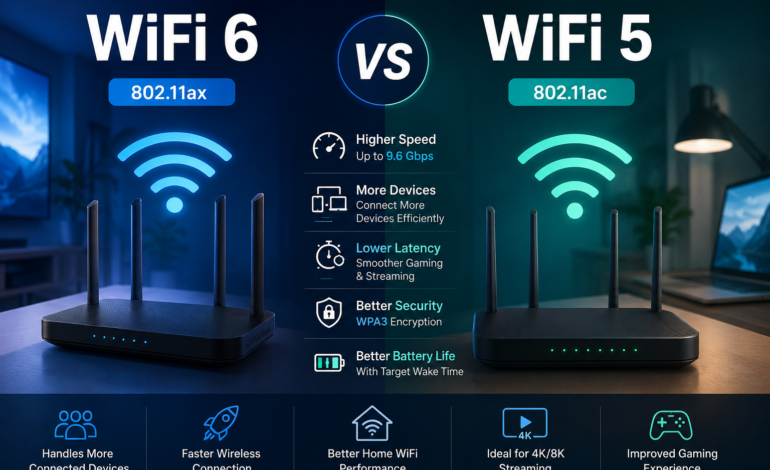
Wi Fi 5, officially known as 802.11ac, was introduced in 2014. It became the standard for high-speed wireless networking and significantly improved wireless internet speed compared to older Wi Fi generations.
Some popular Wi Fi 5 features include:
- Faster download and upload speeds
- Dual-band support (5 GHz)
- MU-MIMO technology
- HD and 4K video streaming
- Better gaming performance than older standards
Even today, many homes and offices continue to rely on Wi Fi 5 because it offers excellent performance for typical internet usage.
What Is Wi Fi 6?
Wi Fi 6, officially called 802.11ax, is the latest mainstream wireless networking standard. It was designed to improve home Wi Fi performance while handling dozens of connected devices simultaneously.
Some major Wi Fi 6 benefits include:
- Higher network efficiency
- Lower latency
- Better battery life for connected devices
- Improved security with WPA3
- Better performance in crowded environments
Unlike previous generations, Wi Fi 6 focuses not only on increasing Wi Fi 6 speed but also on delivering a smoother experience for smart homes, offices, and public networks.
802.11ax vs 802.11ac: Wi Fi Standards Explained
Understanding 802.11ax vs 802.11ac is essential before upgrading your router.
| Feature | Wi Fi 5 (802.11ac) | Wi Fi 6 (802.11ax) |
|---|---|---|
| Maximum Speed | Up to 3.5 Gbps | Up to 9.6 Gbps |
| Frequency Bands | 5 GHz | 2.4 GHz & 5 GHz |
| Security | WPA2 | WPA3 |
| Efficiency | Good | Excellent |
| Multiple Devices | Moderate | Outstanding |
| Battery Saving | No | Yes (Target Wake Time) |
These Wi Fi standards explained show that Wi Fi 6 is designed for today’s connected world rather than simply increasing speed.
Wi Fi 6 vs Wi Fi 5 Speed Comparison
One of the biggest reasons people upgrade is improved speed.
In a Wi Fi 6 vs Wi Fi 5 speed comparison, Wi Fi 6 offers a theoretical maximum speed of 9.6 Gbps, while WiFi 5 reaches around 3.5 Gbps.
However, real-world performance depends on factors such as:
- Internet plan
- Router quality
- Device compatibility
- Distance from the router
- Network congestion
Although you may not always notice three times faster downloads, Wi Fi 6 provides a faster wireless connection, especially when several devices are connected at the same time.
Wi Fi 6 Benefits Over Wi Fi 5
Let’s explore the biggest Wi Fi 6 benefits.
1. Better Home Wi Fi Performance
Modern homes often have smartphones, laptops, smart TVs, gaming consoles, security cameras, and smart speakers connected simultaneously.
Wi Fi 6 manages all these devices efficiently without slowing down the network.
2. Faster Wireless Connection
Thanks to OFDMA and improved MU-MIMO technology, Wi Fi 6 provides a more stable and faster wireless connection, even during heavy usage.
3. Improved Security
Wi Fi 6 supports WPA3 encryption, offering stronger protection against cyber threats than WPA2 used by Wi Fi 5.
4. Lower Latency
Gamers and video callers benefit from lower latency, resulting in smoother gameplay and clearer video conferencing.
5. Energy Efficiency
Target Wake Time (TWT) allows compatible devices to conserve battery by communicating with the router more efficiently.
Wi Fi 5 Features That Still Matter
Although Wi Fi 6 is newer, Wi Fi 5 features remain impressive.
Wi Fi 5 is ideal if you:
- Live in a small household
- Stream HD or 4K content
- Browse the web regularly
- Don’t have many connected devices
- Want an affordable router
For many users, WiFi 5 still delivers excellent performance without requiring new hardware.
Is Wi Fi 6 Better Than Wi Fi 5?
A common question is, Is Wi Fi 6 better than Wi Fi 5?
The answer depends on your needs.
Choose Wi Fi 6 if you:
- Own multiple smart devices
- Play online games
- Work from home
- Frequently stream 4K or 8K videos
- Want future-proof technology
Choose Wi Fi 5 if you:
- Use only a few devices
- Have a limited budget
- Already experience stable internet performance
For most new router purchases, Wi Fi 6 is the smarter long-term investment because it supports modern networking technologies and future devices.
Should You Upgrade to WiFi 6?
If your current router is several years old, upgrading can noticeably improve home Wi Fi performance.
However, remember that your devices also need Wi Fi 6 support to enjoy the full advantages.
If both your router and devices support Wi Fi 6, you’ll experience:
- Better network stability
- Faster downloads
- Lower latency
- Improved security
- Better performance with many connected devices
Conclusion
When comparing Wi Fi 6 vs Wi Fi 5, it’s clear that Wi Fi 6 represents a significant improvement in wireless networking. While Wi Fi 5 continues to offer reliable performance for everyday tasks, Wi Fi 6 delivers faster speeds, better efficiency, stronger security, and superior handling of multiple devices.
If you’re buying a new router or planning to future-proof your home network, Wi Fi 6 is the recommended choice. However, if your current Wi Fi 5 setup already meets your needs, there’s no urgent reason to upgrade immediately.
Ultimately, the right choice depends on your internet usage, connected devices, and budget. Understanding 802.11ax vs 802.11ac will help you make a smarter networking decision that delivers the best wireless experience for years to come.
Frequently Asked Questions
Is Wi Fi 6 faster than Wi Fi 5?
Yes. Wi Fi 6 offers a higher maximum speed and performs much better when multiple devices are connected.
Does Wi Fi 6 improve internet speed?
Wi Fi 6 cannot increase the speed provided by your internet service provider, but it can improve your wireless connection and reduce congestion.
Can Wi Fi 5 devices connect to a Wi Fi 6 router?
Yes. Wi Fi 6 is backward compatible, so older Wi Fi 5 devices work without any issues.
Is upgrading to Wi Fi 6 worth it?
If you have many connected devices, frequently stream high-quality content, or work from home, upgrading to Wi Fi 6 is definitely worthwhile.