Poshmark Scams: Common Scams, Warning Signs & How to Stay Safe

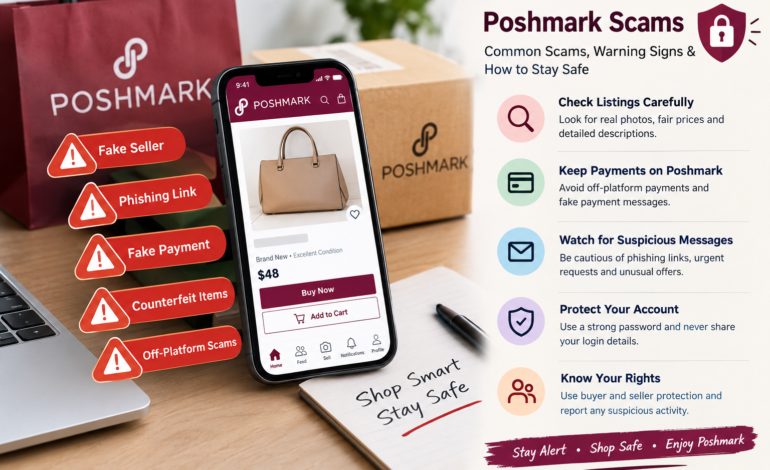
Buying and selling online can be convenient, but marketplaces can also attract dishonest users. Poshmark scams may involve fake listings, suspicious payment requests, phishing links, counterfeit products, or attempts to move transactions away from the platform.
Understanding how these schemes work can help buyers and sellers recognize warning signs before losing money or personal information. Whether you are new to Poshmark or already use the marketplace regularly, learning basic Poshmark safety practices is an important part of every transaction.
This guide explains common Poshmark scams, how to recognize suspicious activity, and what steps you can take if something goes wrong.
What Are Poshmark Scams?
Poshmark scams are fraudulent activities involving buyers, sellers, accounts, listings, payments, or communications connected to the marketplace. Some scams are designed to steal money, while others attempt to obtain login credentials, payment details, or personal information.
A scammer may pretend to be a legitimate buyer or seller and create a situation that looks like a normal transaction. The warning signs can sometimes be subtle, which is why understanding common patterns is useful.
The safest approach is to keep transactions within Poshmark’s official systems and avoid unusual requests involving external payments, suspicious links, or personal information.
How Do Poshmark Scams Work?
Most Poshmark marketplace scams rely on trust and urgency. A scammer may create a believable profile, offer an attractive price, or send a message claiming that immediate action is required.
Some schemes target buyers, while others focus on sellers. For example, a buyer might attempt to manipulate a seller into sending merchandise outside the normal process. A seller could also advertise an item that does not accurately match the listing.
Other scams use emails, text messages, or websites designed to imitate legitimate Poshmark communications. These Poshmark phishing scams can attempt to collect usernames, passwords, payment information, or other sensitive details.
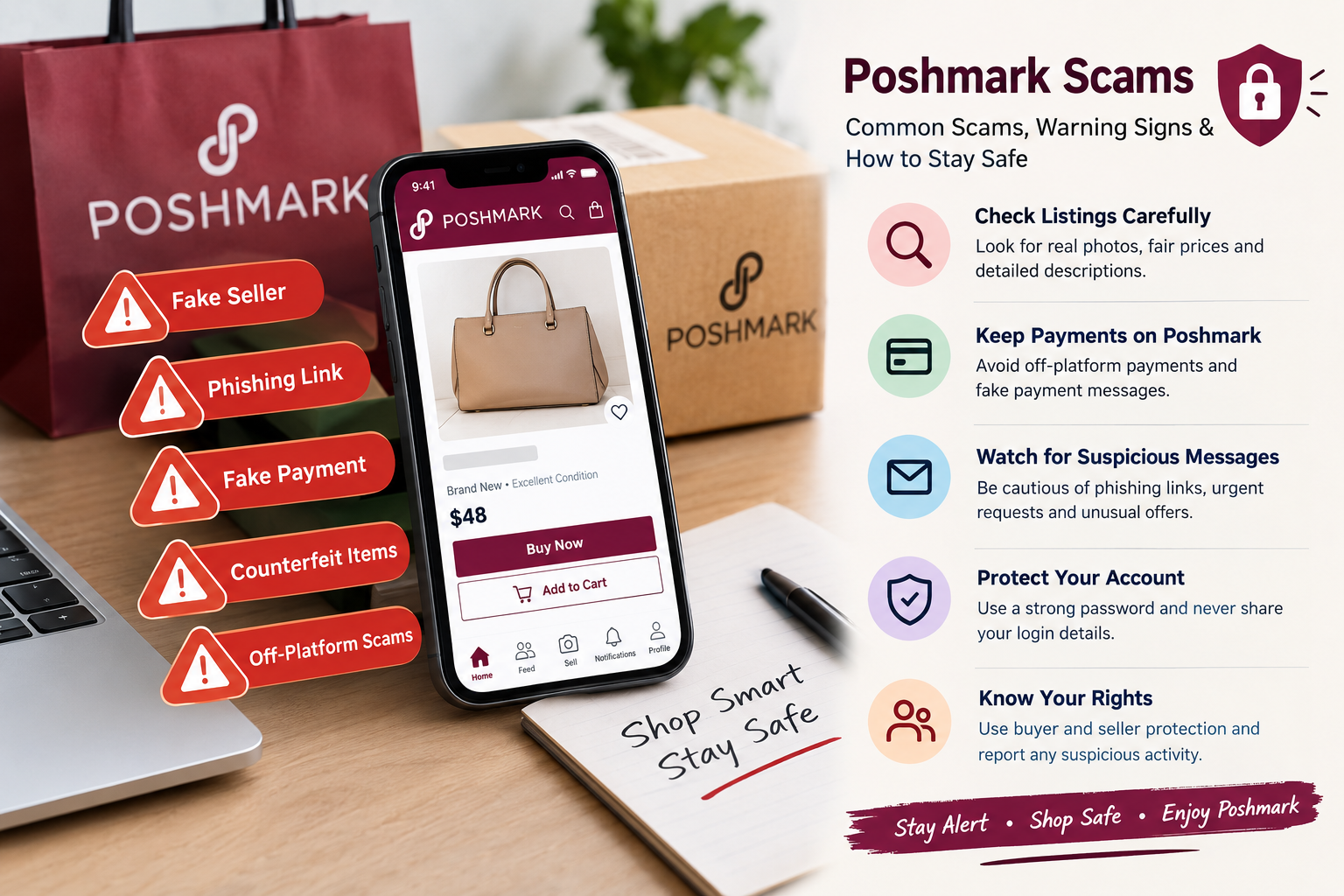
Common Poshmark Scams to Avoid
Knowing the most common patterns makes suspicious activity easier to recognize.
1. Fake Seller Scams
A Poshmark fake seller may advertise an expensive or popular product at an unusually attractive price. The listing can contain copied photographs, misleading descriptions, or information that does not match the actual item.
Before purchasing, examine the listing carefully. Look at the seller’s profile, available information, item photographs, descriptions, and transaction history where available.
If a deal seems dramatically different from comparable listings, take additional time to verify the details rather than rushing into a purchase.
2. Fake Buyer Scams
Poshmark buyer scams can target sellers by creating confusion around payments, shipping, or communication.
A suspicious buyer may ask the seller to communicate through another platform or provide an external payment method. They may also claim that Poshmark requires an unusual step before payment can be completed.
These requests deserve caution. Sellers should follow the marketplace’s normal transaction and shipping procedures instead of relying on instructions provided through unsolicited messages.
3. Poshmark Fake Payment Scams
A Poshmark fake payment scheme may involve a message or email claiming that a buyer has paid when the transaction has not actually been completed.
Scammers may use screenshots, fake receipts, or emails designed to resemble legitimate notifications.
Do not ship an item simply because someone sends a payment screenshot. Verify the transaction through the official Poshmark account or app before taking action.
4. Poshmark Off-Platform Scams
One of the important Poshmark scams to avoid involves moving a transaction outside the marketplace.
A user may ask you to communicate through another messaging service or accept payment directly through another platform. The stated reason may sound harmless, such as avoiding fees or making payment faster.
However, moving away from the official transaction process can reduce the protections available through the marketplace and make disputes more difficult.
5. Poshmark Phishing Scams
Poshmark phishing scams use deceptive messages, websites, or emails to trick users into revealing information.
A phishing message might claim that:
- Your account needs verification.
- A payment has failed.
- Your listing has violated a rule.
- Your account will be suspended.
- You need to confirm shipping information.
- You must click a link to receive payment.
The message may look convincing, but the link can lead to a fraudulent website.
6. Counterfeit Product Scams
Poshmark counterfeit products can be a concern when expensive branded items are involved.
A listing may use authentic-looking photographs while describing an item as genuine. In some cases, copied images can make a fake product appear legitimate.
Buyers should carefully examine product photographs, descriptions, seller information, and available authentication or protection processes for eligible purchases.
7. Shipping Scams
Poshmark shipping scams can involve unusual delivery instructions, fake shipping notifications, or attempts to manipulate sellers into sending packages somewhere other than the approved address.
Sellers should follow the shipping instructions associated with the official transaction rather than relying on a buyer’s separate message.
Keep records of the transaction and shipment until the order is completely resolved.
8. Return and Refund Scams
Poshmark return scams may involve disagreements over an item’s condition, authenticity, or description.
A buyer might claim that an item is substantially different from the listing, while a seller may dispute the claim. Not every return dispute is fraudulent, but inconsistent evidence or unusual demands can be warning signs.
Use the platform’s official dispute and return procedures rather than agreeing to informal arrangements.
Poshmark Scam Warning Signs
Recognizing Poshmark scam warning signs early can prevent many problems.
Watch for users who:
- Pressure you to act immediately.
- Offer deals that seem unusually attractive.
- Ask for payment outside Poshmark.
- Send suspicious links.
- Request passwords or verification codes.
- Claim that Poshmark needs your banking information through a message.
- Send fake payment confirmations.
- Use copied or inconsistent product photographs.
- Avoid answering basic questions about an item.
- Ask you to ship somewhere different from the official transaction information.
- Encourage you to communicate through another platform.
- Create a strong sense of urgency.
One warning sign does not automatically prove that someone is a scammer. However, several unusual behaviors appearing together deserve careful attention.
How to Spot a Fake Poshmark Seller
If you want to how to spot a fake Poshmark seller, start by examining the listing rather than focusing only on the price.
Look for clear photographs, detailed descriptions, consistent product information, and reasonable pricing. Compare the item with similar listings and pay attention to unusual claims.
Be particularly cautious when a seller tries to move the transaction outside Poshmark or asks for payment through an unrelated service.
How to Spot a Fake Buyer on Poshmark
Sellers should also know how to spot a fake buyer on Poshmark.
A suspicious buyer may send unusual payment instructions, request personal information, provide a questionable payment confirmation, or ask you to ship an item before the official transaction is confirmed.
Never rely solely on screenshots or messages as proof of payment. Check the official transaction status before shipping.
Poshmark Fake Email and Text Message Scams
A Poshmark email scam or Poshmark text message scam can be especially dangerous because it may imitate a legitimate notification.
Scammers often use familiar branding, urgent language, and links that appear trustworthy.
Instead of clicking a questionable link, access your Poshmark account through the official application or website and check whether the claimed issue actually exists.
Never provide your password, verification code, payment details, or other sensitive information simply because a message requests it.
How to Avoid Poshmark Payment Scams
To avoid Poshmark payment scams, keep transactions within the platform’s official payment process.
Do not accept screenshots as proof that money has been transferred. Verify the actual transaction status through your account.
Also avoid requests to pay or receive money through unfamiliar external services. A legitimate transaction should not require you to bypass established marketplace procedures.
How to Protect Your Poshmark Account
Strong Poshmark account security can reduce the risk of unauthorized access.
Use a unique, difficult-to-guess password and avoid sharing your login credentials. Be cautious with unexpected emails and messages requesting account verification.
If you suspect that your account has been compromised, change your password and review your account activity. Follow Poshmark’s official support and security procedures for further assistance.
Poshmark Buyer Protection and Seller Protection
Poshmark buyer protection and Poshmark seller protection are designed around the marketplace’s transaction processes and policies.
However, users should understand that protection is not a reason to ignore suspicious behavior. Following platform rules, keeping communication within the appropriate channels, and maintaining accurate transaction records can help when a dispute occurs.
Before making an expensive purchase or completing a valuable sale, review the current marketplace policies so you understand what procedures apply to your transaction.
What to Do If You Get Scammed on Poshmark
If you believe you have experienced a scam, act quickly.
First, preserve evidence. Save relevant messages, emails, screenshots, listing information, transaction details, and shipping records.
Next, use Poshmark’s official support or reporting channels to explain what happened. If payment information or another financial account may have been compromised, contact the relevant financial institution through its official contact method.
If you entered your password on a suspicious website, change the affected password immediately and avoid using the same password elsewhere.
How to Report a Poshmark Scam
Knowing how to report a Poshmark scam can help you respond appropriately when suspicious activity occurs.
Use Poshmark’s official reporting or support process and provide as much relevant evidence as possible. Include transaction information, usernames, messages, suspicious links, and screenshots when appropriate.
Avoid confronting suspected scammers or attempting to investigate them yourself. Reporting suspicious activity through the appropriate channels is generally safer.
Is Poshmark Safe for Buyers and Sellers?
The question “Is Poshmark safe for buyers and sellers?” does not have to be treated as simply yes or no.
Online marketplaces involve interactions between many different users, so risks can exist even when a platform provides security measures. Buyers and sellers can reduce their exposure by following official transaction procedures, protecting their accounts, and recognizing suspicious behavior.
The key is to understand the marketplace’s rules and avoid actions that bypass its established systems.
Final Thoughts on Poshmark Scams
Poshmark scams can take several forms, from fake sellers and counterfeit products to phishing messages, fake payments, shipping problems, and off-platform transactions.
The most useful defense is awareness. Check listings carefully, verify payments through the official account, avoid suspicious links, protect your login information, and keep transactions within the platform’s established process.
If something feels unusual, slow down before completing the transaction. Taking a few extra minutes to verify information can help prevent a much larger problem later.