
What Is a Hybrid Mattress? The Complete Construction, Benefits & Buyer’s Guide

Sleep quality direSleep quality dictates energy levels, physical health, and long-term well-being. If you wake up with morning aches, feel trapped in your bed, or suffer from overheating, your current sleeping surface is likely failing you. Enter the hybrid mattress—the modern sleep industry’s premier response to single-material compromises.
If you are wondering what is a hybrid mattress and why it has taken the bedding market by storm, the answer lies in its multi-layered design. Combining the contouring pressure relief of specialty memory foam or latex with the dynamic, reactive support of an advanced pocket coil system, a hybrid bed delivers balanced comfort for almost every body type and sleep position.
This comprehensive guide breaks down the precise hybrid mattress definition, uncovers what is inside a hybrid mattress, weighs the hybrid mattress pros and cons, and helps you decide is a hybrid mattress worth buying for your bedroom.
What Is a Hybrid Mattress? (Definition & Core Concept)
To understand the core hybrid mattress meaning, it helps to look at the traditional options that came before it.
Historically, buyers had to choose between two main options:
- Traditional Innerspring Mattresses: High bounce and strong airflow, but poor pressure relief and significant motion transfer.
- All-Foam / Memory Foam Mattresses: Deep body contouring and motion absorption, but poor temperature regulation and a sink-in “trapped” feel.
+-------------------------------------------------------------+
|                     THE HYBRID FORMULA                      |
|                                                             |
|   Memory Foam / Latex         Pocketed Coil System          |
|  (Pressure Relief & Softness) + (Bounce, Airflow & Support)  |
|                                                             |
|                   = THE HYBRID MATTRESS                     |
+-------------------------------------------------------------+
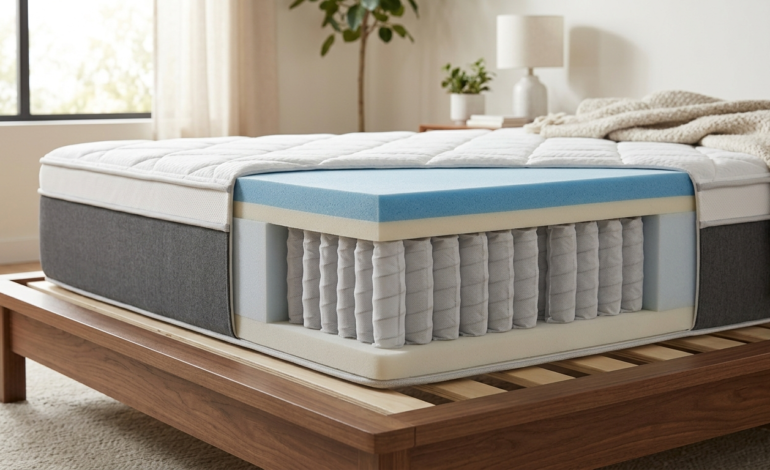
A hybrid mattress bridges this gap. By definition, a hybrid mattress is a multi-tier bed that pairs an internal innerspring mattress core (specifically, individually wrapped pocketed coils) with substantial top layers of memory foam, polyfoam, or natural latex.
What Makes a Mattress a True Hybrid?
Not every bed with foam and springs qualifies as a genuine hybrid. A true foam and coil mattress must feature:
- At least 2 to 3 inches of high-density comfort foam (memory foam, latex, or responsive polyfoam) at the top.
- An independent pocket coil mattress support core (rather than interconnected open wire grids).
- A multi-layered structure engineered to balance contouring and spring support.
What Is Inside a Hybrid Mattress? (Layers & Construction)
Understanding how hybrid mattresses are made requires examining the cross-section of a modern bed. The structural integrity depends on precise engineering across distinct hybrid mattress layers.
+-----------------------------------------------------------------+
| COVER LAYER: Breathable Organic Cotton, TENCEL™, or Phase-Change |
+-----------------------------------------------------------------+
| COMFORT LAYER: Gel-Infused Memory Foam or Responsive Latex      |
+-----------------------------------------------------------------+
| TRANSITION LAYER: High-Density Polyfoam (Prevents Coil Bottoming)|
+-----------------------------------------------------------------+
| SUPPORT CORE: Individually Encased Pocket Coils (Zoned Gauge)   |
+-----------------------------------------------------------------+
| BASE LAYER: High-Density Foundation Polyfoam                    |
+-----------------------------------------------------------------+
1. The Cover Layer
The outer fabric holds the hybrid mattress materials together. High-end models feature covers made of breathable organic cotton, TENCEL™ plant fibers, or phase-change materials (PCM) engineered to cool the surface on contact.
2. The Mattress Comfort Layer
Positioned directly beneath the cover, the mattress comfort layer provides initial cushioning, body contouring, and surface comfort.
- Memory Foam: Cradles sensitive joints, reacts to body heat, and provides deep pressure relief.
- Gel Memory Foam: Infused with thermal gel beads to absorb and disperse body heat.
- Natural Latex: Provides immediate responsive mattress bounce, natural cooling, and eco-friendly durability.
3. The Transition Layer
Placed beneath the top comfort layers, this high-density polyfoam strip acts as a safety buffer. It prevents your body from sinking too deep and hitting the rigid steel coils below, distributing weight evenly across the bed.
4. The Mattress Support System (Pocket Coil Core)
The structural heart of the bed is its mattress support system. Unlike older units with linked wires, modern hybrids use individually encased springs. Each coil sits in its own fabric sleeve, compressing independently to match your body shape while promoting internal airflow.
5. The Base Foundation Layer
A 1-inch to 2-inch layer of high-density base foam rests at the very bottom. It acts as a flat surface for the pocket coils to press against, ensuring internal stability and protecting the overall structure.
How Does a Hybrid Mattress Work?
Understanding what is a hybrid mattress and how does it work comes down to the complementary relationship between foam push-back and spring compression.
       Weight Applied
             │
             ▼
┌───────────────────────────┐  <-- Top Foam Layer:
│    Contouring Cushion     │      Relieves Pressure Points (Hips/Shoulders)
└────────────┬──────────────┘
             │
             ▼
┌───────────────────────────┐  <-- Pocket Coil Core:
│  Independent Compression  │      Pushes Back for Spinal Alignment
└───────────────────────────┘
When you lie down:
- Initial Cushioning: Your weight compresses the top foam layers, which map to the curves of your hips, shoulders, and lower back.
- Deep Adaptive Support: As weight reaches the pocket coils, only the springs directly beneath your heaviest zones depress. This keeps the rest of the surface level, maintaining proper spinal support.
- Air & Kinetic Dispersion: Body heat escapes through the open gaps between the coils, while kinetic energy gets absorbed by the fabric-encased springs.
Major Benefits of Sleeping on a Hybrid Mattress
Why are hybrid beds taking over the market? The hybrid mattress benefits address the most common sleep complaints:
1. Superior Pressure Relief
By combining body-conforming foams with responsive springs, a hybrid absorbs weight at high-impact zones like the hips, shoulders, and lower back. This reduces tossing and turning caused by surface numbness.
2. Targeted Spinal Alignment
Proper alignment requires keeping your spine straight whether sleeping on your back or side. Hybrid beds use zoned pocket coils—using thicker gauge steel under the heavy torso and softer steel under the shoulders—to prevent lower back sag.
3. Active Temperature Regulation
A common complaint about all-foam beds is heat retention. Do hybrid mattresses sleep cooler than memory foam? Yes. Because the coil core is mostly open air, body heat flows out of the sides rather than trapping beneath you, ensuring a breathable mattress surface.
4. Excellent Motion Isolation
Do hybrid mattresses have good motion isolation? Because each coil moves independently within its fabric pocket, energy doesn’t travel across the surface. If a partner rolls over or gets out of bed, the movement remains isolated to their side.
5. Strong Edge Support
Traditional foam beds often collapse along the perimeter when sitting or sleeping near the edge. Hybrids use extra-thick coils or dense foam borders to reinforce the structural perimeter, maximizing total usable sleep surface.
6. Ease of Movement & Bounce
Unlike all-foam options that cause a “sinking in quicksand” feeling, the internal spring core provides a responsive mattress surface. This makes changing positions, getting out of bed, and intimate activity effortless.
Hybrid Mattress Pros and Cons
Before purchasing, weigh the advantages and disadvantages of a hybrid mattress:
| Advantages (Pros) | Disadvantages (Cons) |
| Balanced pressure relief and dynamic support | Higher price tag than basic innersprings or entry-level foams |
| Superior airflow and temperature regulation | Heavier weight makes moving or setup challenging |
| Excellent edge support and perimeter stability | Potential for coil squeaking over 8+ years of heavy use |
| High versatility for all sleeping positions | Takes longer to unpack and expand (bed-in-a-box) |
| Reduces motion transfer between partners | Deep contouring is less intense than pure memory foam |
Detailed Comparisons: Hybrid vs. Alternatives
Selecting the right bed requires evaluating how hybrids compare against single-material mattresses.
+-----------------------------------------------------------------+
|                  MATTRESS TYPE COMPARISON                       |
+-------------------┬-------------------┬-------------------------+
|     HYBRID        |    MEMORY FOAM    |    INNERSPRING          |
| Coils + Thick Foam| All Foam Layers   | Wire Grid + Thin Top    |
| Balanced Contour  | Deep Hug & Sink   | High Bounce & Firm      |
| High Airflow      | Retains Heat      | Maximum Airflow         |
+-------------------┴-------------------┴-------------------------+
1. Hybrid Mattress vs. Memory Foam
Understanding what is the difference between hybrid and memory foam mattress models comes down to support, cooling, and movement:
- Support Core: Memory foam beds use high-density polyfoam bases; hybrids use pocket steel coils.
- Cooling: Hybrids circulate air through internal coils; standard memory foam traps heat.
- Bounce: Memory foam has a slow-rebound “hug”; hybrids offer a springy, responsive feel.
2. Hybrid Mattress vs. Innerspring
The difference between hybrid and innerspring mattress models focuses on pressure relief and motion control:
- Coil Technology: Innersprings use interconnected helical wire units; hybrids use independent pocket springs.
- Comfort Layer: Innersprings feature thin quilted pillow tops; hybrids use 2 to 4 inches of dense foam.
- Motion Isolation: Innersprings transfer movement across the bed; hybrids isolate motion to the point of pressure.
3. Hybrid Mattress vs. Latex
Comparing hybrid mattress vs latex options highlights durability and material sourcing:
- All-Latex Beds: Made entirely of natural rubber sap, delivering high bounce and eco-friendly durability, but carrying premium price tags.
- Latex Hybrids: Pair natural latex comfort layers with a pocket coil base, delivering latex performance at a lower price point.
Hybrid Mattresses by Sleep Position
Different body types and sleep orientations require specific support profiles. What type of sleeper is a hybrid mattress best for?
SIDE SLEEPERS           BACK SLEEPERS         STOMACH SLEEPERS
Deep Shoulder Sink      Neutral Lumbar Arch   Firm Pelvic Elevation
  [ Soft - Medium ]       [ Medium-Firm ]          [ Firm ]
Are Hybrid Mattresses Good for Side Sleepers?
Yes. Side sleepers require deep pressure relief to keep the hips and shoulders from jamming. A soft-to-medium hybrid lets joint points sink in naturally while pocket coils keep the spine straight.
Are Hybrid Mattresses Good for Back Sleepers?
Yes. Back sleepers need a balance of contouring and lumbar support. A medium-firm mattress allows the glutes to sink slightly while filling the lower back arch to prevent morning stiffness.
Are Hybrid Mattresses Good for Stomach Sleepers?
Yes, provided the mattress is firm enough. Stomach sleepers need strong core support to keep the hips from sagging lower than the chest, which strains the lumbar spine. Look for hybrids with heavy-gauge support coils and firm top foams.
Are Hybrid Mattresses Good for Combination Sleepers?
Yes. Sleepers who shift between their back, side, and stomach throughout the night benefit from the responsive coil system, which adapts quickly as positions change.
Are Hybrid Mattresses Good for People with Back Pain?
Yes. Low back discomfort often stems from poor spinal alignment or pressure points. Zoned pocket coil systems push back against heavy hips while top foams cradle the lower back, relieving spinal pressure.
Firmness Levels and Thickness Considerations
Understanding hybrid mattress firmness levels helps you select the right comfort profile for your build and preferences:
1 ─────── 3 ─────── 5 ─────── 7 ─────── 10
  SOFT        MEDIUM      MEDIUM-FIRM    FIRM
(Side Sleepers) (Combo/Back)  (Back/Pairs) (Stomach/Heavy)
- Soft (Plush) [Rating 3-4]: Deep surface sinkage. Best for lightweight sleepers (<130 lbs) and strict side sleepers.
- Medium [Rating 5-6]: Balanced contouring and bounce. Great for combination sleepers and average weight individuals (130–230 lbs).
- Medium-Firm [Rating 6.5-7.5]: The industry sweet spot. Recommended for back pain relief, back sleepers, heavy sleepers, and couples.
- Firm [Rating 8-10]: Rigid push-back with minimal sink. Ideal for stomach sleepers and individuals over 230 lbs.
How Thick Should a Hybrid Mattress Be?
A quality hybrid mattress should measure between 10 to 14 inches thick:
- Base Layer: 1–2 inches
- Pocket Coils: 6–8 inches
- Transition Layer: 1–2 inches
- Comfort Layer: 2–4 inches
Avoid options under 10 inches, as thin layers can cause heavier body zones to bottom out against the coils.
Setup, Frames & Maintenance Requirements
Does a Hybrid Mattress Need a Box Spring?
No. Modern pocket coil hybrids perform best on flat, rigid surfaces. Traditional box springs can cause pocket coils to wear unevenly.
Can You Use a Hybrid Mattress on Any Bed Frame?
Yes, as long as the support surface is flat and sturdy. Compatible options include:
- Platform Beds: Solid wood or metal bases offer optimal support.
- Slatted Foundations: Ensure wood slats are spaced no more than 3 inches apart so internal coils don’t sag between the gaps.
- Adjustable Bases: Flexible pocket coil cores work seamlessly with motorized head and foot elevation frames.
       CORRECT SLAT SPACING                  INCORRECT SLAT SPACING
┌───┐ 3" max ┌───┐ 3" max ┌───┐        ┌───┐   > 3" Gap   ┌───┐
│   ├────────┤   ├────────┤   │        │   ├──────────────┤   │
└───┴────────┴───┴────────┴───┘        └───┴──────────────┴───┘
   Coils fully supported                  Coils sag through gaps
Mattress Durability: How Long Does a Hybrid Mattress Last?
A quality hybrid bed lasts 7 to 10 years. High-density comfort foams and heat-treated steel coils resist structural breakdown longer than traditional innersprings or lower-density all-foam beds.
How Often Should You Replace a Hybrid Mattress?
Inspect your bed for replacement signs every 7 to 8 years, including:
- Visible body indentations deeper than 1.5 inches.
- Squeaking or popping sounds from internal pocket springs.
- Waking up with morning stiffness or joint pain.
- Noticeable loss of perimeter edge support.
Practical Buyer’s Checklist
Use this quick checklist to pick the best model for your needs:
- Check the Coil Count & Gauge: Target 800+ pocket coils (for a Queen size). Lower gauge numbers (e.g., 13–14 gauge) mean firmer, stronger steel.
- Verify Foam Densities: Look for memory foam densities of 3.5 to 5.0 lbs/cu.ft. to ensure long-term durability.
- Ensure Zoned Core Support: If you experience back pain, choose a model with targeted lumbar zoning.
- Review Warranty & Sleep Trials: Select brands offering at least a 100-night risk-free trial and a 10-year non-prorated warranty.
Final Verdict: Is a Hybrid Mattress Worth Buying?
A hybrid mattress offers a balanced approach to modern sleep tech. By combining the contouring comfort of memory foam with the dynamic support and airflow of pocket coils, it eliminates the main trade-offs of single-material beds.
Whether you need pressure relief for side sleeping, cool airflow for hot nights, or proper alignment for lower back pain, choosing a high-quality hybrid bed provides a strong foundation for long-term sleep health.ctl