What Is Radical Empathy and Why Does It Matter? The Ultimate Guide

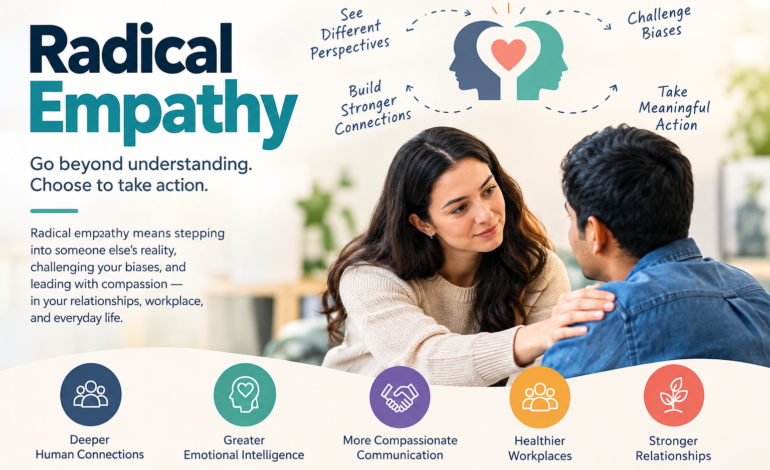
In an increasingly polarized world, mastering radical empathy—the conscious decision to actively step into another person’s reality and take meaningful action—is essential for building deep human connections. While conventional empathy often stays within our comfort zones, practicing radical empathy requires us to challenge our biases, engage with foreign perspectives, and lead with compassionate action in our daily lives, relationships, and workplaces.
Whether you want to build stronger interpersonal relationships, foster an empathetic workplace culture, or step into compassionate leadership, mastering radical empathy skills is one of the most vital choices you can make.
1. What Is Radical Empathy? Meaning, Definition, and Core Principles
To understand this concept, we first need to look at how it expands upon traditional human compassion.
Understanding the Radical Empathy Meaning and Definition
At its core, standard empathy is the capacity to share and understand another person’s feelings. It is often divided into cognitive empathy (intellectually grasping someone’s situation) and emotional empathy (vicariously feeling what they feel).
The radical approach goes significantly further. Coined and expanded by authors, scholars, and thought leaders like Isabel Wilkerson and Terri Givens, radical empathy is defined as an active, conscious, and courageous decision to move beyond mere understanding into vulnerability, self-examination, and direct action.
While traditional understanding often operates within our comfort zones—feeling bad for someone similar to us—this elevated approach demands that we actively cross social, cultural, and ideological boundaries. It requires us to step out of our own experiences and engage deeply with individuals whose background, beliefs, or lived reality may be entirely foreign to our own.
Plaintext
Traditional Empathy:  "I see your pain and I understand how you feel."
Radical Empathy:      "I acknowledge my biases, actively step into your reality,
                       and take responsibility to act and create change."
Traditional Empathy vs Radical Empathy Explained
Understanding these differences comes down to three core differentiators: depth, vulnerability, and action.
| Feature | Standard Empathy | Radical Empathy |
| Primary Focus | Passive understanding | Active, courageous connection |
| Comfort Zone | Usually stays within familiar social circles | Deliberately bridges differences & discomfort |
| Self-Reflection | Minimal self-examination required | Requires confronting personal bias & privilege |
| Outcome | Emotional resonance or sympathy | Action, systemic change, deep human connection |
Key Pillars of a Radical Empathy Mindset
Developing this transformative mindset relies on six key foundational pillars:
- Willingness to Be Vulnerable: Acknowledging that you do not have all the answers and being open to having your worldview challenged.
- Confronting Personal Bias: Recognizing that your perspective is shaped by your background, privilege, and experiences, and actively dismantling those assumptions.
- Active Listening: Hearing others without immediately planning your rebuttal or judging their experience.
- Perspective Taking: Intentionally stepping into someone else’s reality to consider how their background shapes their choices and feelings.
- Action-Oriented Compassion: Translating emotional resonance into practical support, policy change, or behavioral adjustment.
- Sustained Commitment: Treating deep connection not as a single act, but as a continuous daily practice.
2. The Psychology of Radical Empathy and Emotional Intelligence
To understand how to develop these skills, it helps to examine how human connection operates within psychology and emotional intelligence (EQ).
Plaintext
    ┌────────────────────────────────────────────────────────┐
    │              EMOTIONAL INTELLIGENCE (EQ)               │
    └───────────────────────────┬────────────────────────────┘
                                │
                ┌───────────────┴───────────────┐
                ▼                               ▼
        Self-Awareness                   Social Awareness
    (Recognizing own bias)            (Understanding others)
                │                               │
                └───────────────┬───────────────┘
                                ▼
                         RADICAL EMPATHY
            (Active Engagement + Actionable Compassion)
How Radical Empathy Enhances Emotional Intelligence (EQ)
Emotional intelligence consists of four main pillars: self-awareness, self-management, social awareness, and relationship management.
Practicing radical empathy represents the highest evolution of social awareness and relationship management. While basic EQ helps you read the room, this deep connection enables you to understand why the room feels the way it does—and gives you the psychological tools to transform the energy through compassionate communication.
Three Types of Empathetic Understanding
Psychologists generally classify human connection into three categories. The radical framework synthesizes all three and adds an element of structural action:
- Cognitive Empathy (Perspective Taking): The intellectual ability to see a situation from another person’s point of view.
- Emotional Empathy: The physical or emotional sensation of mirroring another person’s feelings (e.g., feeling sad when a friend cries).
- Compassionate Empathy (Compassionate Action): Understanding and feeling someone’s pain and feeling moved to help them solve it.
3. Importance and Benefits of Building Radical Empathy
Why is this mindset so critical today? Whether in personal life, community spaces, or large business organizations, its importance cannot be overstated.
Key Benefits of Radical Empathy in Daily Life
- Deeper Human Connection: Moves interactions past small talk and surface-level politeness into authentic, trust-filled relationships.
- Effective Conflict Resolution: When individuals feel deeply heard, defensive walls drop, making resolving conflicts significantly easier.
- Enhanced Self-Awareness: By attempting to understand radical differences, you gain clarity on your own conditioning, triggers, and values.
- Increased Emotional Resilience: Engaging with tough emotions builds psychological strength and reduces impulse-driven reactions.
Business Value of Practicing Radical Empathy at Work
In corporate environments, integrating radical empathy in business yields measurable ROI:
- Higher Employee Retention: Staff members who feel understood and valued are far less likely to suffer burn-out or leave.
- Boosted Innovation: An empathetic workplace culture fosters psychological safety, allowing employees to share bold, unconventional ideas without fear of ridicule.
- Improved Customer Loyalty: Companies that practice deep user research better understand consumer pain points, resulting in superior products and service design.
4. How to Practice Radical Empathy in Daily Life
Learning how to practice these habits daily requires converting abstract ideas into actionable steps. Here are practical strategies you can begin using today.
Plaintext
                  PRACTICING DAILY CONNECTION
                               │
        ┌──────────────────────┼──────────────────────┐
        ▼                      ▼                      ▼
 Active Listening    Respectful Communication   Perspective Taking
 (No interruptions)   (Validation over advice)  (Seek root causes)
Step 1: Active Listening and Empathetic Communication Skills
Active listening is the bedrock of strong communication skills. Most people listen with the intent to reply; empathetic listeners pay attention with the intent to comprehend.
- Put away distractions: Give 100% of your visual and mental attention.
- Validate before responding: Use phrases like “It sounds like you felt really overwhelmed when that happened.”
- Avoid immediate advice-giving: Resist the urge to “fix” the problem unless specifically asked. Focus on understanding others first.
- Practice respectful communication: Maintain a non-defensive posture, calm tone, and attentive eye contact.
Step 2: Perspective Taking and Deep Compassionate Action
Perspective taking means consciously setting aside your personal assumptions to view a scenario through someone else’s historical, cultural, and emotional context.
Ask yourself these internal reflection questions when you disagree with someone:
- “What life experiences might lead them to hold this view?”
- “What fears or unmet needs might be driving their reaction?”
- “What assumptions am I making about their motives?”
Step 3: Radical Empathy Communication Strategies
To transform how you converse daily, implement these specific communication strategies:
- The “Pause and Inquire” Technique: When a conversation triggers frustration, pause for three seconds and ask an open-ended question like: “Can you help me understand how you reached that conclusion?”
- Replace Judgment with Curiosity: Whenever you feel the urge to label someone as “irrational,” reframe your thought to: “What am I missing about their situation?”
- Acknowledge Shared Humanity: Focus on universal core human needs—safety, belonging, respect, and love—even when methods or political viewpoints differ drastically.
5. Applying Radical Empathy in Leadership and the Workplace
The modern workplace is undergoing a structural shift. Command-and-control management styles are obsolete; empathy-based leadership has taken its place.
Plaintext
       TRADITIONAL LEADERSHIP            EMPATHETIC / INCLUSIVE LEADERSHIP
       ┌─────────────────────┐              ┌─────────────────────────┐
       │ - Top-down orders   │              │ - Active listening      │
       │ - Focus on metrics  │      VS      │ - Psychological safety  │
       │ - Rigid compliance  │              │ - Deep connection skills│
       │ - Siloed isolation  │              │ - Compassionate action  │
       └─────────────────────┘              └─────────────────────────┘
What Is Radical Empathy in Leadership?
Leadership rooted in radical empathy means prioritizing the holistic well-being, unique perspectives, and psychological safety of team members alongside operational goals.
Compassionate leadership and inclusive leadership are not soft skills; they are critical business imperatives. A leader practicing this mindset doesn’t just ask “Did you hit your deadline?” They ask “What obstacles are in your way, and how can I support you to do your best work?”
Examples of Radical Empathy in Workplace Culture
- Flexible Work Arrangements: Recognizing that an employee dealing with eldercare or personal grief needs custom scheduling rather than strict, punitive oversight.
- Transparent Crisis Management: During organizational restructuring, empathetic leaders share open, honest information early rather than leaving teams in anxiety.
- Constructive Conflict Resolution: Addressing performance issues by first identifying underlying factors—such as burnout, inadequate training, or personal stress—before issuing disciplinary steps.
Strategies to Build an Empathetic Workplace
Creating a widespread, supportive culture requires intentional organizational design:
- Implement Training Programs: Offer regular workshops on workplace communication, bias reduction, and connection skills.
- Reward Compassionate Behavior: Incorporate teamwork and building trust into annual performance reviews alongside hard metrics.
- Establish Safe Spaces: Provide anonymous feedback channels, Employee Resource Groups (ERGs), and mental health support platforms.
6. How Radical Empathy Transforms Personal Relationships
Whether with partners, family members, or long-time friends, practicing radical empathy in relationships creates relational safety that allows love and trust to thrive.
Plaintext
              SURFACE LEVEL
        [Unexpressed Needs & Fear]
                    │
                    ▼ (Triggers Defensiveness)
        [Conflict & Blame Cycle]
                    │
   ═════════════════╧═════════════════
     RADICAL EMPATHY BREAKTHROUGH
   ═════════════════╤═════════════════
                    │
                    ▼ (Active Listening & Validation)
        [Psychological Safety]
                    │
                    ▼
          DEEP HUMAN CONNECTION
Fostering Deep Connection and Relational Safety
When you deploy deep understanding for effective communication in personal bonds, you break destructive patterns of defensive escalation.
- It Replaces Blame with Curiosity: Instead of accusatory statements (“You never help me”), re-frame the dialogue around feelings and needs (“I feel overwhelmed, and I need your partnership right now”).
- It Fosters Deep Psychological Safety: Partners who practice active understanding know they can voice vulnerable truths without facing instant judgment or rejection.
- It Sustains Relationships Through Crisis: When couples face severe life stresses—financial loss, health challenges, or grief—compassionate listening serves as the anchor holding the bond intact.
7. Overcoming Challenges and Building Radical Empathy Safely
While the importance of deep compassion is clear, practicing it consistently is challenging work. It demands significant emotional energy and can sometimes lead to fatigue if proper personal boundaries are not maintained.
Plaintext
               SUSTAINABLE RADICAL EMPATHY
                            │
       ┌────────────────────┴────────────────────┐
       ▼                                         ▼
Self-Compassion                           Clear Boundaries
(Care for yourself first)                (Prevent emotional fatigue)
Guarding Against Compassion Fatigue
Constantly absorbing and feeling the emotions of others without self-care leads to emotional burn-out.
- Maintain Emotional Boundaries: Remember that understanding someone’s pain does not mean you must carry their burden as your own.
- Practice Self-Compassion: You cannot offer deep care to others if your own emotional cup is entirely empty.
Radical Empathy vs Endorsing Harmful Behavior
A common misconception is that practicing radical empathy means excusing toxic, abusive, or harmful actions. This is false.
This mindset allows you to understand why someone behaves a certain way (e.g., past trauma, fear, systemic frustration) without condoning or accepting bad behavior. You can empathetically grasp a person’s underlying pain while firmly enforcing boundaries or removing yourself from harm.
Overcoming Cognitive Biases and Ego Resistance
Our brains naturally seek efficiency by grouping people into simple categories (“us” vs “them”). Overcoming this automatic cognitive bias requires intentional daily practice.
- Start small: Read books or watch documentaries from cultures outside your experience.
- Engage directly: Sit down for a coffee with someone whose background differs fundamentally from yours.
- Mindful awareness: Practice mindfulness to notice when your ego steps in to judge or dismiss someone else.
Summary Checklist: Living Radical Empathy Daily
Use this quick checklist to track your progress in building this transformative mindset:
- [ ] Am I actively listening without interrupting or formulating my response ahead of time?
- [ ] Have I paused to consider personal biases when encountering views I dislike?
- [ ] Am I creating psychological safety for those around me at home and work?
- [ ] Am I translating my understanding into helpful, supportive action?
- [ ] Am I maintaining clear boundaries to protect my own emotional well-being?
Conclusion: The Transformative Power of Radical Empathy
Adopting radical empathy is far more than a passive character trait; it is a vital, transformative practice for navigating modern life. By committing to understanding different perspectives, building emotional intelligence, practicing active listening, and leading with compassionate communication, you become a powerful force for unity and healing.
In your personal relationships, at your job, and across society at large, practicing radical empathy allows you to build genuine trust, transform conflict into connection, and construct a more compassionate, inclusive world for everyone.
Frequently Asked Questions (FAQ)
What is radical empathy in simple terms?
It is the active, intentional effort to step fully into another person’s reality—especially someone very different from you—and using that deep understanding to guide your actions and choices.
How does radical empathy differ from regular empathy?
While regular empathy often happens naturally with people we already understand or agree with, the radical approach requires us to push past personal comfort, examine our own biases, and build deep connections across societal, cultural, or political divides.
Can radical empathy be practiced in the workplace?
Yes! Practicing radical empathy at work improves leadership skills, enhances team collaboration, supports inclusive management, and builds a psychologically safe corporate culture where innovation can thrive.